Best Microwave Ablation in Mohali
- Serving Patients From: Chandigarh, Mohali, Panchkula, Punjab, Haryana, Himachal Pradesh
What Is Microwave Ablation?
Think of Microwave Ablation (MWA) as a heat weapon against tumors. But instead of cutting open your body, your doctor uses a thin needle.
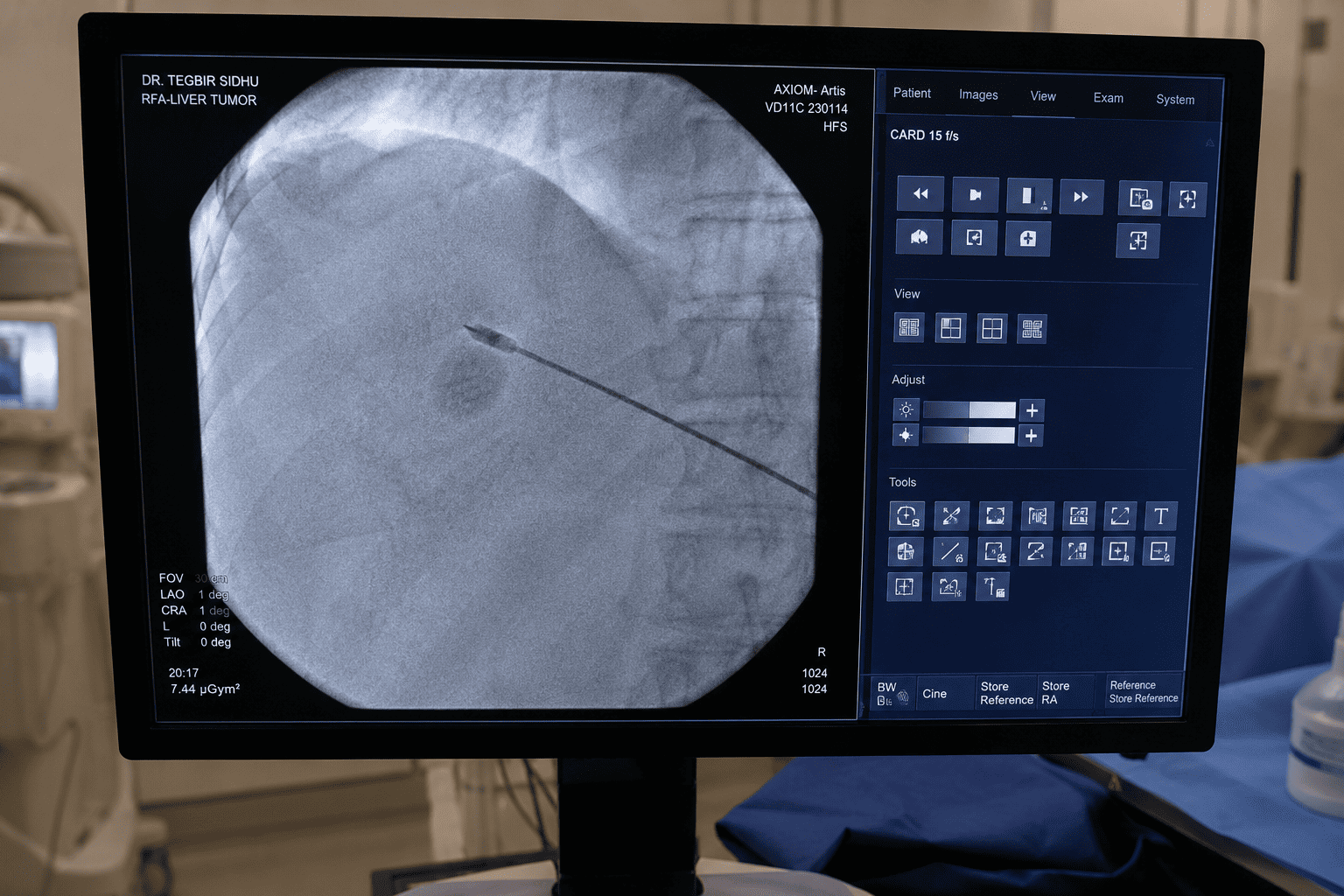
Under image guidance, the interventional radiologist inserts a special antenna directly into the liver tumor. He delivers high-frequency microwaves. These waves create intense heat (over 100°C) inside the tumor.
The result? The cancer cells cook and die within minutes. Your body naturally removes them over time. Healthy liver tissue stays safe.
Doctors also call this MWA Treatment in Mohali. It is a frontline option for patients who cannot tolerate open surgery or prefer a faster recovery.
- If you feel any of these, seek help immediately. Early detection makes Liver Tumor Ablation in Mohali highly effective.
Who Needs This Treatment?
- You have primary liver cancer (Hepatocellular carcinoma)
- You have metastatic liver cancer (cancer that has spread from the colon, breast, or lung)
- You have 1 to 3 small tumors (usually under 5 cm)
- Surgery is too risky due to other health conditions.
- You are waiting for a liver transplant (ablation buys time)
- You simply want a less invasive option.
Common Symptoms That Lead to Diagnosis
- Unexplained weight loss
- Pain in the upper right belly
- A hard lump below the ribcage
- Yellow skin or eyes (jaundice)
- Constant fatigue
- Swollen abdomen (ascites)
6 Powerful Benefits of Microwave Ablation
- No large incisions. Only a tiny needle puncture.
- Same-day or next-day discharge. Most patients go home within 24 hours.
- Preserves a healthy liver. Only the tumor gets destroyed.
- Repeatable. If a new tumor appears, you can repeat MWA.
- Less pain. No cutting of muscles or ribs.
- Fast return to daily life. Back to work in days, not months.
Causes & Risk Factors for Liver Tumors
Causes & Risk Factors
Chronic Hepatitis B or C
Cirrhosis (any cause)
Heavy alcohol use
Fatty liver disease (NAFLD)
Diabetes with obesity
How It Affects the Liver
Long-term inflammation leads to scarring and tumors
Scar tissue replaces healthy cells
Direct liver damage over years
Rising cause even in non-drinkers
Increases liver stress
Causes & Risk Factors
How it Affects the Liver
Chronic Hepatitis B or C
Long-term inflammation leads to scarring and tumors
Cirrhosis (any cause)
Scar tissue replaces healthy cells
Heavy alcohol use
Direct liver damage over years
Fatty liver disease (NAFLD)
Rising cause even in non-drinkers
Diabetes with obesity
Increases liver stress
How the Procedure Works (Step-by-Step)

Step 1 – Precise Planning
You lie down comfortably. Your physician studies your latest scans to plan the exact needle path.

Step 2 – Local Anesthesia & Sedation
You remain awake but relaxed. The skin over your liver gets numbed. No general anesthesia needed.

Step 3 – Needle Insertion
Using real-time imaging, the interventional radiologist guides the microwave antenna into the tumor center.

Step 4 – Ablation
He activates the microwave energy for 5–15 minutes. You may feel warmth, but no sharp pain.

Step 5 – Confirmation & Closure
A final scan confirms complete tumor destruction. A small bandage covers the spot.
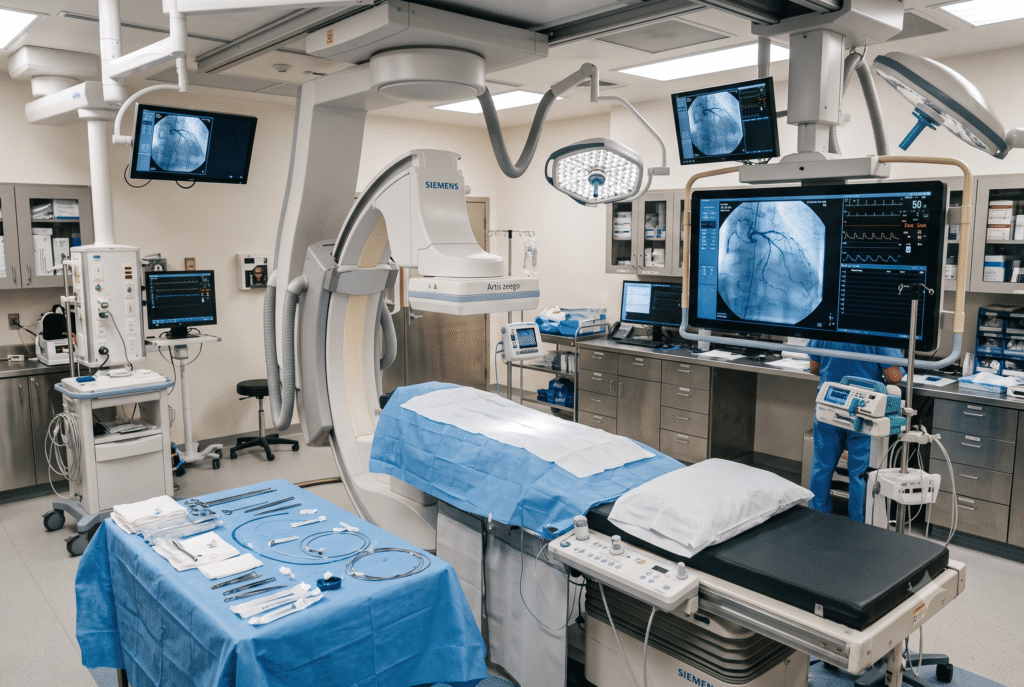
Total time: Usually 45–90 minutes.
Why Choose Dr. Tegbir Sidhu for MWA Treatment?
- Fellowship-trained IR — not all doctors learn MWA.
- Works across Tricity & serves Punjab, Haryana, Himachal.
- Uses latest generation MWA systems = larger kill zones + faster times.
- Fluent in Hindi, Punjabi, and English — you understand every word.
- No unnecessary procedures — honest guidance
- I treat every patient like family. My goal is to destroy the tumor, not your quality of life." — The lead interventional radiologist.
The Complete Treatment Process at Our Mohali Center

1. First Consultation
The specialist reviews your blood work, CT/MRI, and medical history. He explains whether microwave ablation fits you.

2. Pre-Procedure Prep
You stop blood thinners. You fast for 6 hours. The team answers all last-minute questions.

3. Day of MWA Treatment
You arrive in the morning. The procedure happens. You rest in recovery for a few hours.

4. Overnight Observation (if needed)
Most patients go home. Some stay for one night for monitoring.

5. Follow-Up
You meet your doctor after 1 month for a contrast scan. He confirms the tumor is gone.
Recovery & Aftercare – What to Expect
Right after the procedure:
A small bandage on your abdomen. Mild soreness (like a deep bruise). You can walk and eat the same day.
First week at home:
Avoid heavy lifting (over 5 kg). No intense exercise. Take paracetamol if needed (no aspirin).
Return to normal:
Desk work: 2–3 days. Driving: 5–7 days. Full physical activity: 2 weeks.
- The clinical team calls you the next day. We track your recovery personally.
Risks and Safety – Honest Talk
- Mild pain at the needle site (80% of patients)
- Low-grade fever for 2 days (post-ablation syndrome)
- Small fluid collection around the liver
- Minor bleeding (stops on its own)
- Injury to the nearby organ (gallbladder or bowel)
- Major bleeding needing transfusion
The specialist minimizes every risk by:
- Using real-time imaging throughout
- Keeping the antenna away from the bile ducts and vessels
- Having a standby emergency team