Varicose Veins Treatment in Mohali & Chandigarh
Get Lasting Relief Without Surgery |
Leg heaviness, swelling or bulging veins? Learn how a clinical assessment and venous duplex ultrasound can help identify the cause and guide an appropriate treatment plan.
Dr. Tegbir Singh Sidhu • Principal Consultant, Interventional Radiology • Max Super Speciality Hospital, Mohali

What Are Varicose Veins?
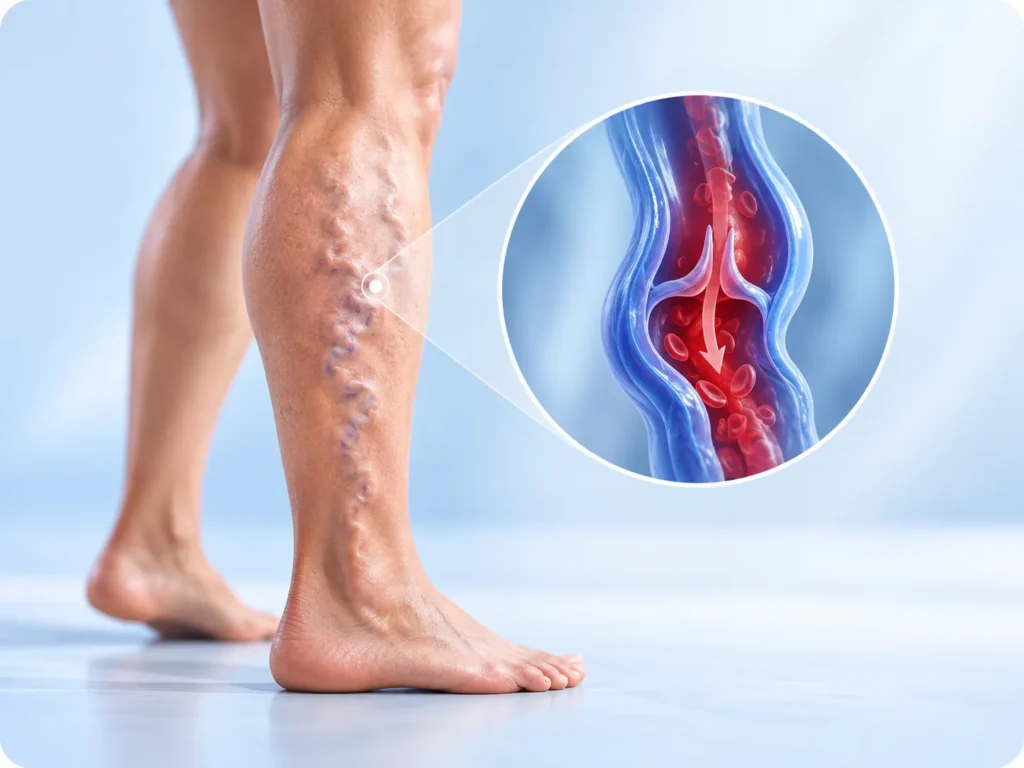
Varicose veins are enlarged, twisted veins that often appear just beneath the skin of the legs. Some look like raised blue or purple cords. Others become noticeable because of aching, heaviness, swelling or skin irritation, even when the veins are less obvious.
Normally, small valves inside leg veins help blood travel back towards the heart. If the valves do not close properly, some blood can flow backwards. Doctors call this venous reflux. Over time, the extra pressure may stretch the vein and produce visible varicose veins.
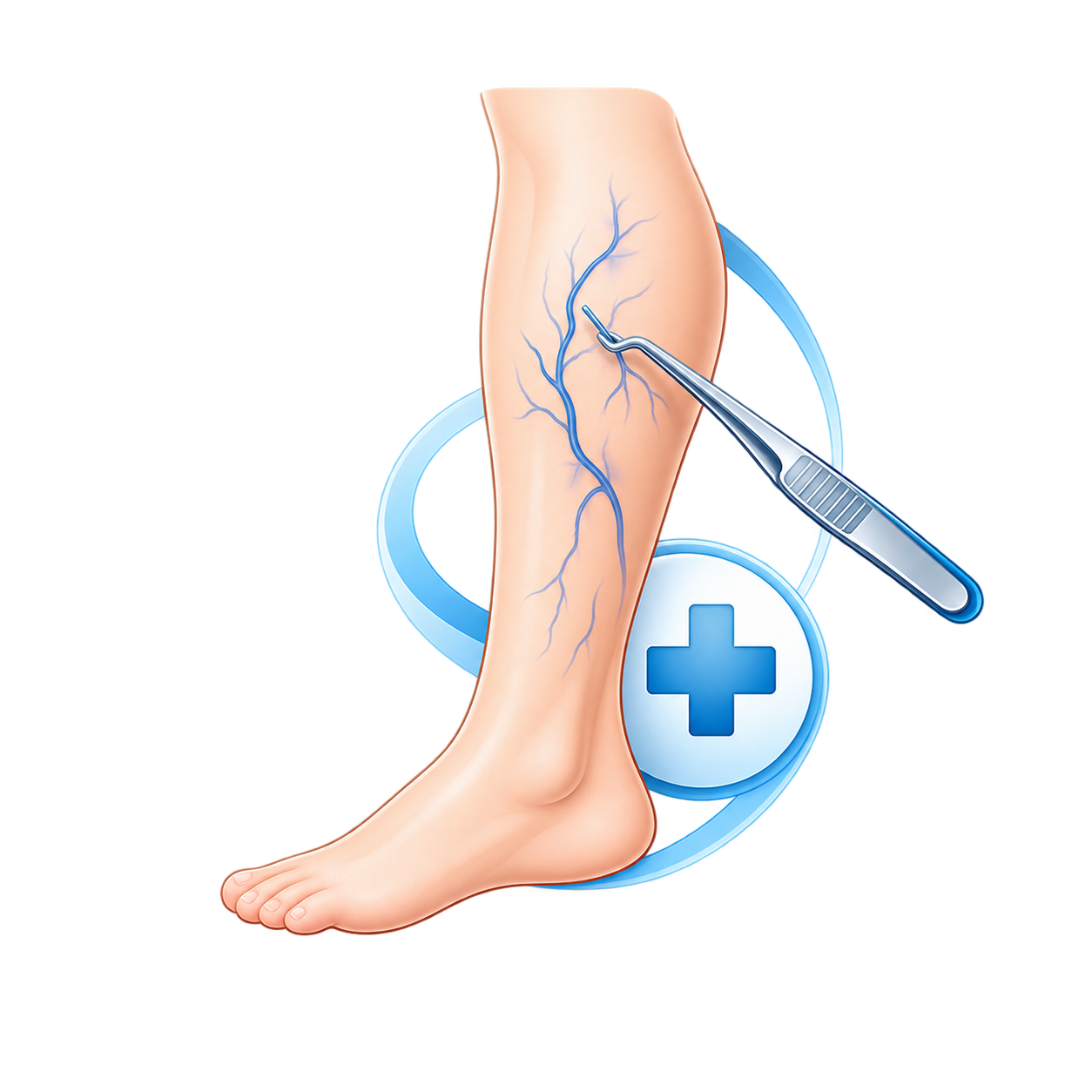
Varicose veins are different from spider veins, which are usually smaller, flatter surface vessels. However, a clinical examination and, when appropriate, a duplex ultrasound help identify whether an underlying vein has reflux
Common Symptoms of Varicose Veins
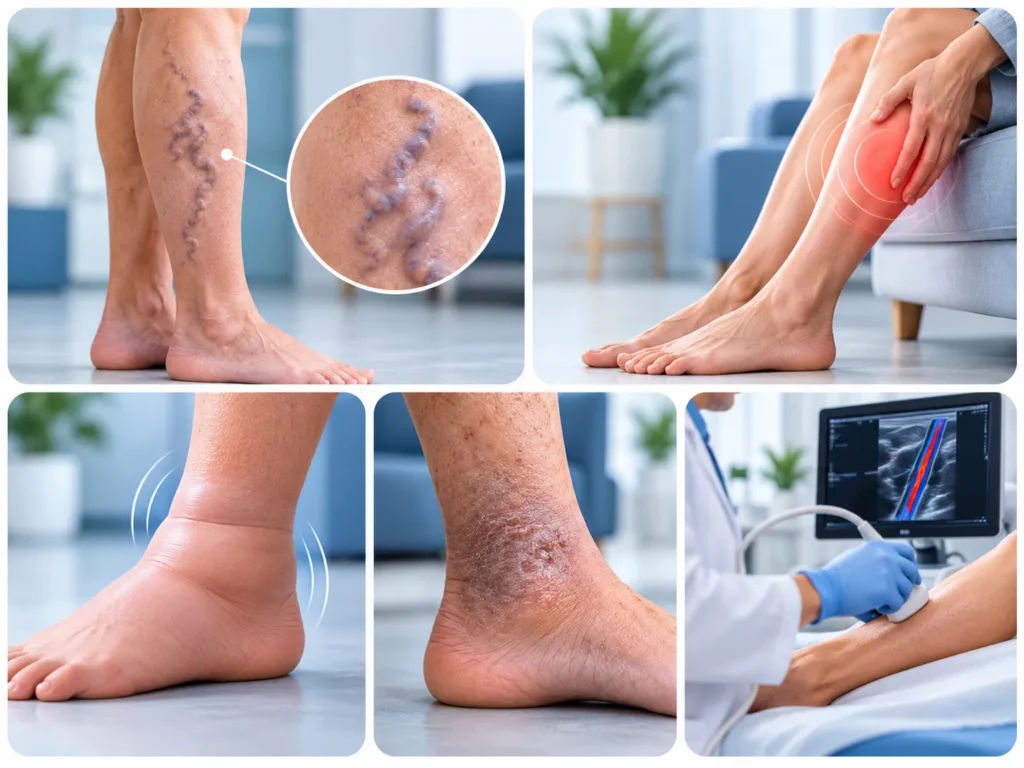
Visible veins are only one part of the picture. Symptoms often feel worse after prolonged standing or sitting and may improve after walking or raising the legs.

Bulging or twisted veins
Rope-like veins that may be blue, purple or skin-coloured.

Leg heaviness or aching
A tired, dragging feeling, particularly towards the end of the day.

Ankle or lower-leg swelling
Swelling that may be more noticeable after standing.

Itching or skin irritation
Dryness, itching or eczema-like changes around the affected area.

Night-time discomfort
Throbbing, cramps or restlessness may accompany venous symptoms.

Skin changes or slow-healing sores
Darkening near the ankle, fragile skin or a leg ulcer warrants medical review.
When Should You See a Doctor?
Consider a specialist assessment when leg pain, heaviness, swelling or itching affects everyday activities; a vein becomes increasingly prominent; or you notice changes in the skin near your ankle. A wound below the knee that is slow to heal also needs assessment.
- Symptoms That Need Urgent Care:- If a varicose vein bleeds, apply firm direct pressure, raise the leg if possible and seek urgent medical help. Do not delay care for ongoing or heavy bleeding. Sudden swelling or pain in one leg, especially with warmth or colour change, may signal a blood clot and needs prompt medical assessment. Chest pain, sudden breathlessness or fainting require emergency hospital care. These symptoms should not be managed through a routine website appointment.
How Are Varicose Veins Diagnosed?
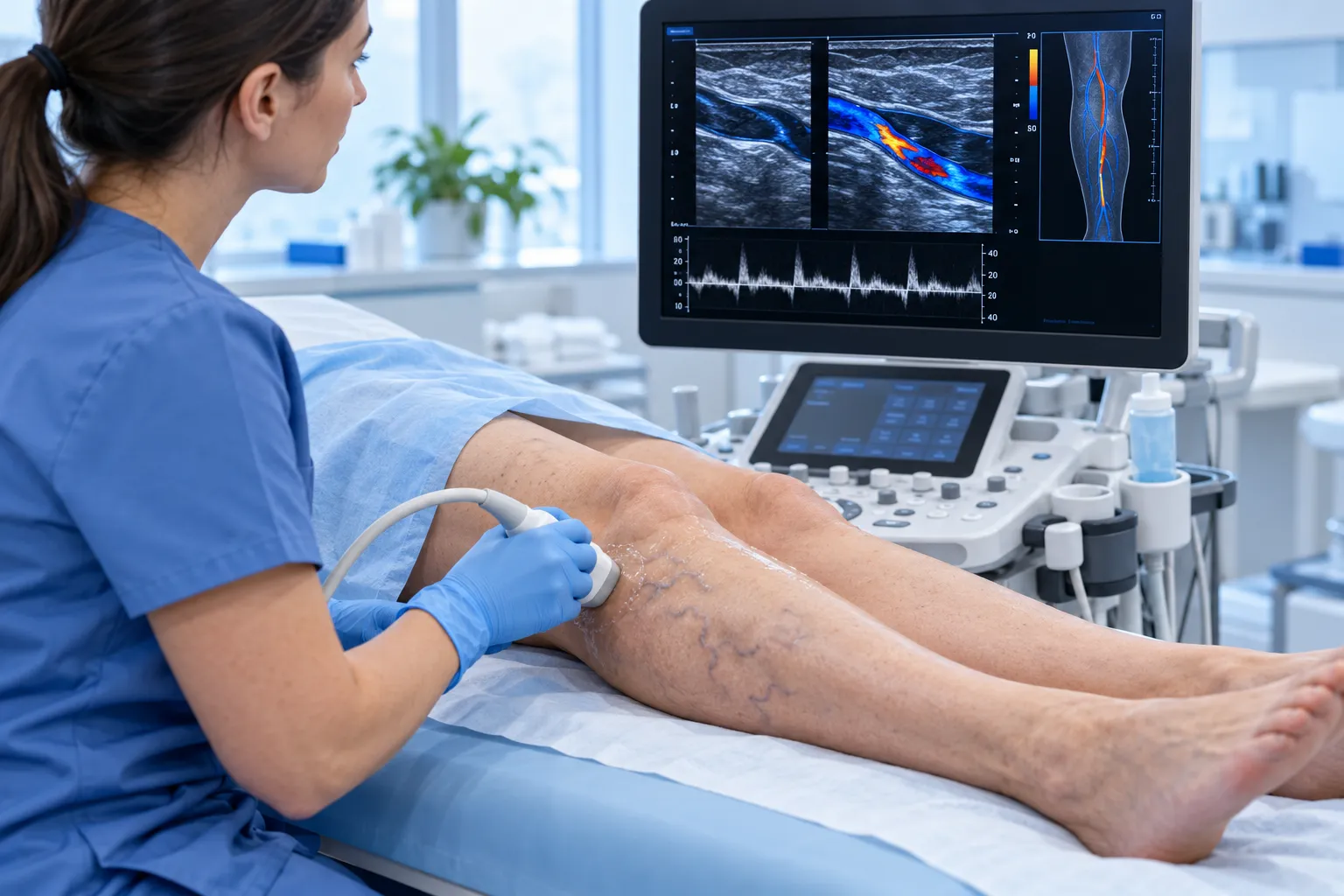
A consultation begins with a discussion of your symptoms, medical history, previous blood clots, medications and any past vein treatment. The clinician examines both legs, including visible veins, swelling and skin changes.
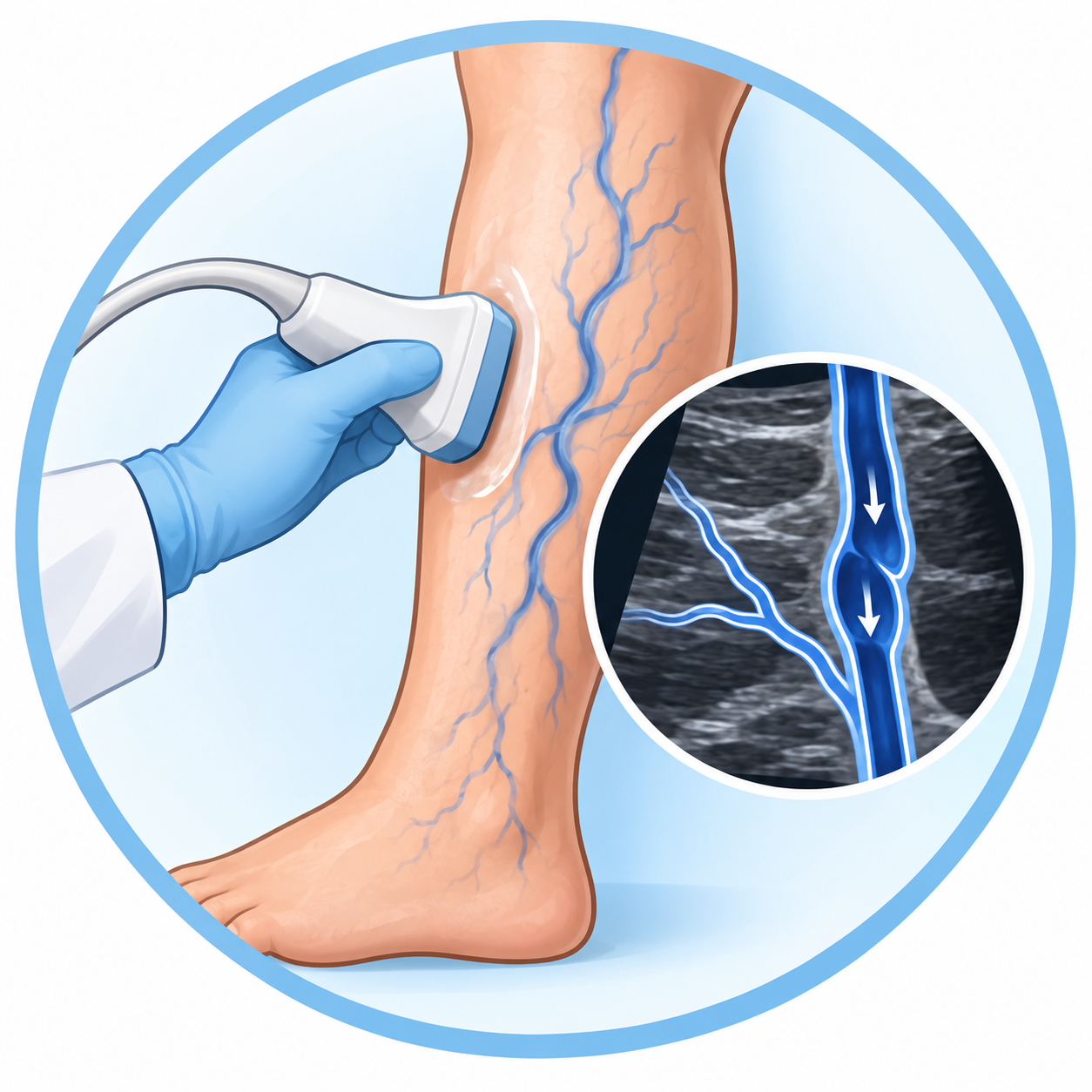
A venous duplex ultrasound is the principal investigation when assessment of reflux is needed. It combines ultrasound imaging with blood-flow measurements to show which veins are working normally, where reflux occurs and whether deeper veins need evaluation.
Why Do Varicose Veins Develop?
Varicose veins usually develop when pressure builds in superficial veins because the valves do not work as effectively as they should. Age, family history, pregnancy, higher body weight and long periods of standing or sitting can increase the likelihood of developing them.

Varicose Veins Treatment Options in Mohali
There is no single best treatment for every leg. Depending on symptoms, ultrasound findings, vein anatomy and overall health, the discussion may include the following options.

Endovenous Laser Treatment (EVLT / EVLA)
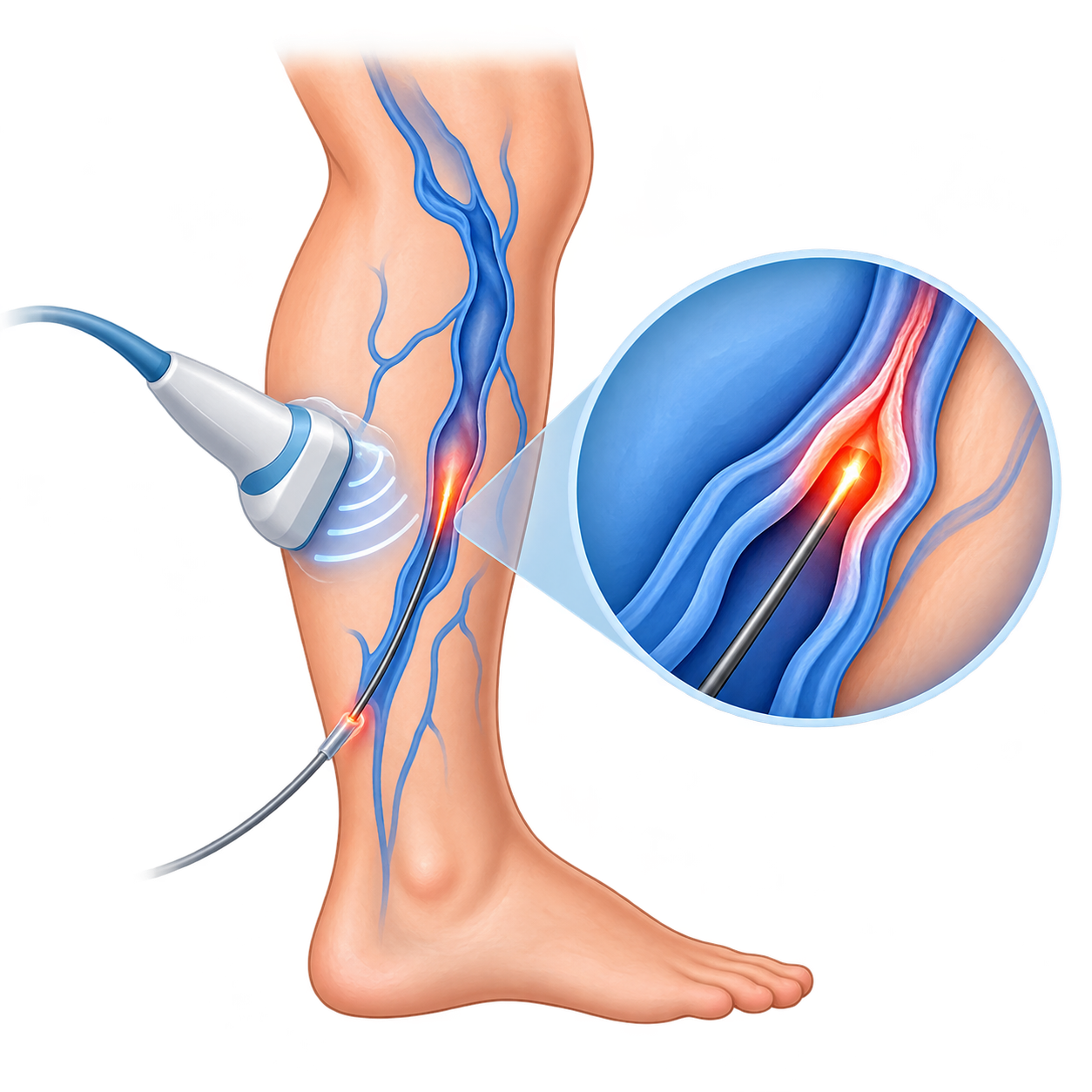
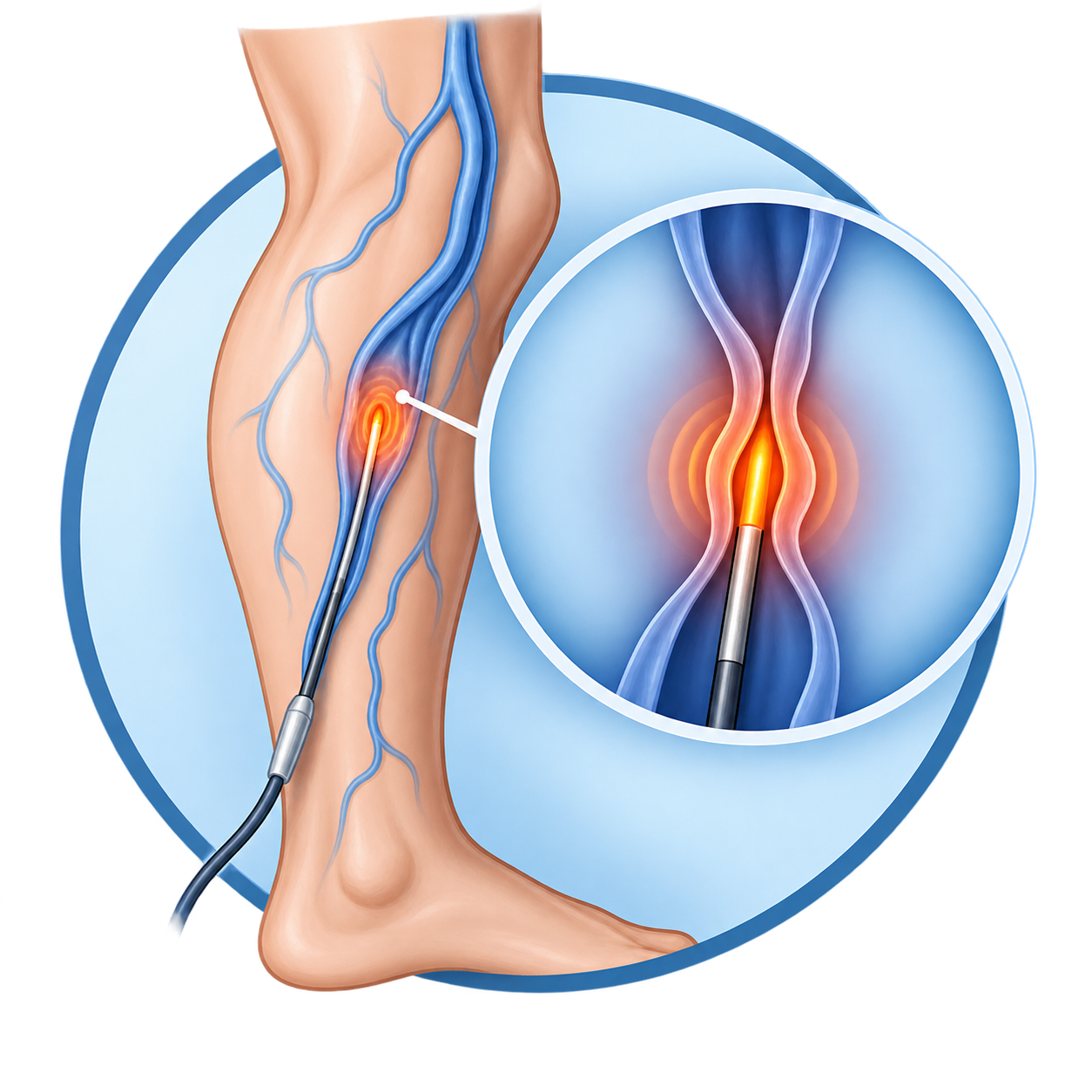
A thin laser fibre is introduced into the affected vein under ultrasound guidance. Controlled heat closes the vein, allowing blood to travel through other functioning veins. It is generally performed through a small puncture rather than a large surgical incision.
Radiofrequency Ablation (RFA)
RFA uses radiofrequency heat delivered through a catheter to close an incompetent superficial vein. Like EVLT, this is an endovenous treatment and is considered for suitable patterns of venous reflux.
Ultrasound-Guided Foam Sclerotherapy
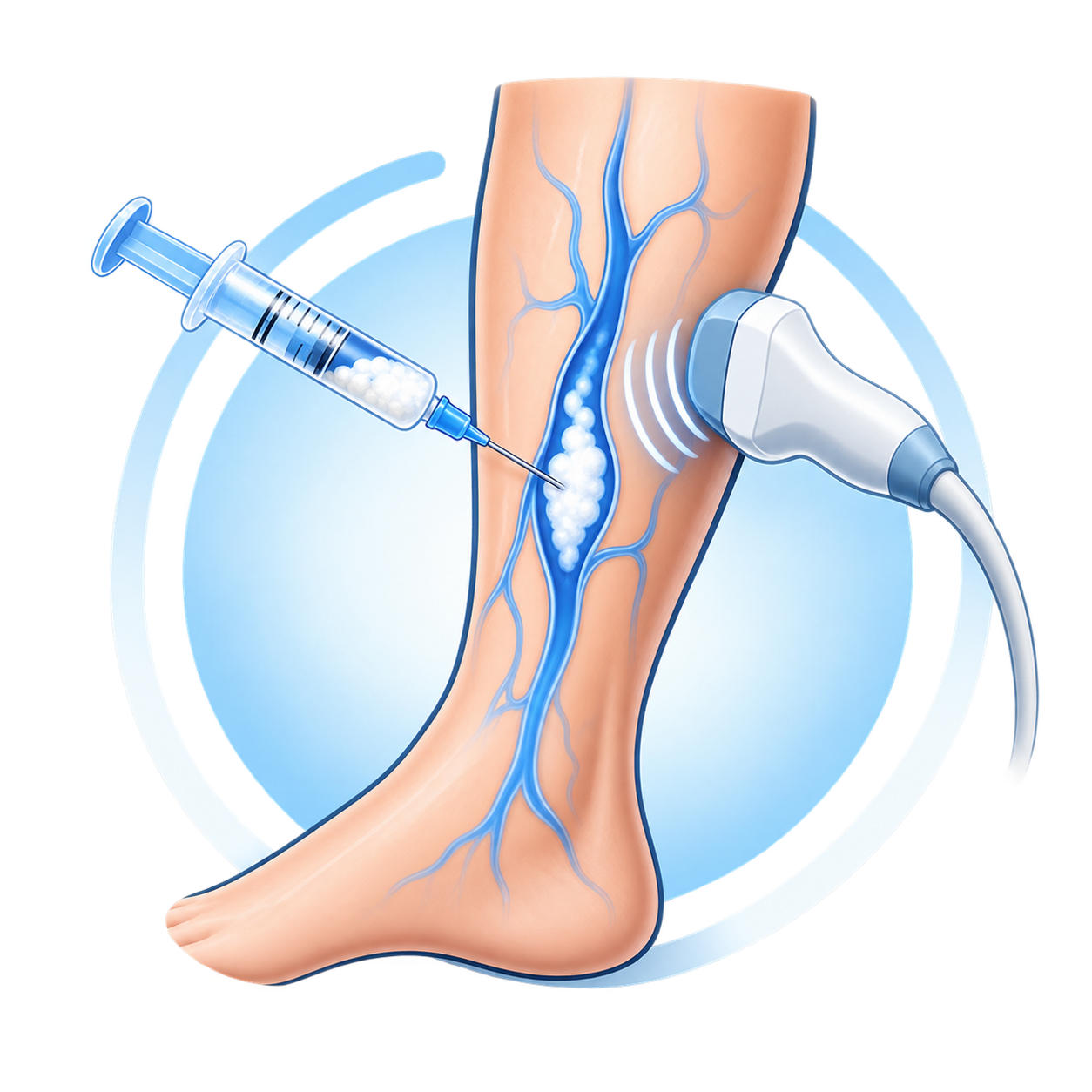
A specialist injects a prescribed foam into selected veins while monitoring placement with ultrasound. It may be used for certain veins or when thermal treatment is unsuitable; the suitability and risk profile require individual assessment.
Other Care, Including Phlebectomy or Surgery
Some patients benefit from treatment of smaller branch veins with ambulatory phlebectomy or sclerotherapy. Conventional surgery may still be appropriate in selected cases. Compression, activity changes and symptom management also form part of care when suitable.
How Does Endovenous Laser or RFA Treatment Work?

Assessment and vein mapping
The team reviews your clinical history and duplex ultrasound to identify the refluxing vein
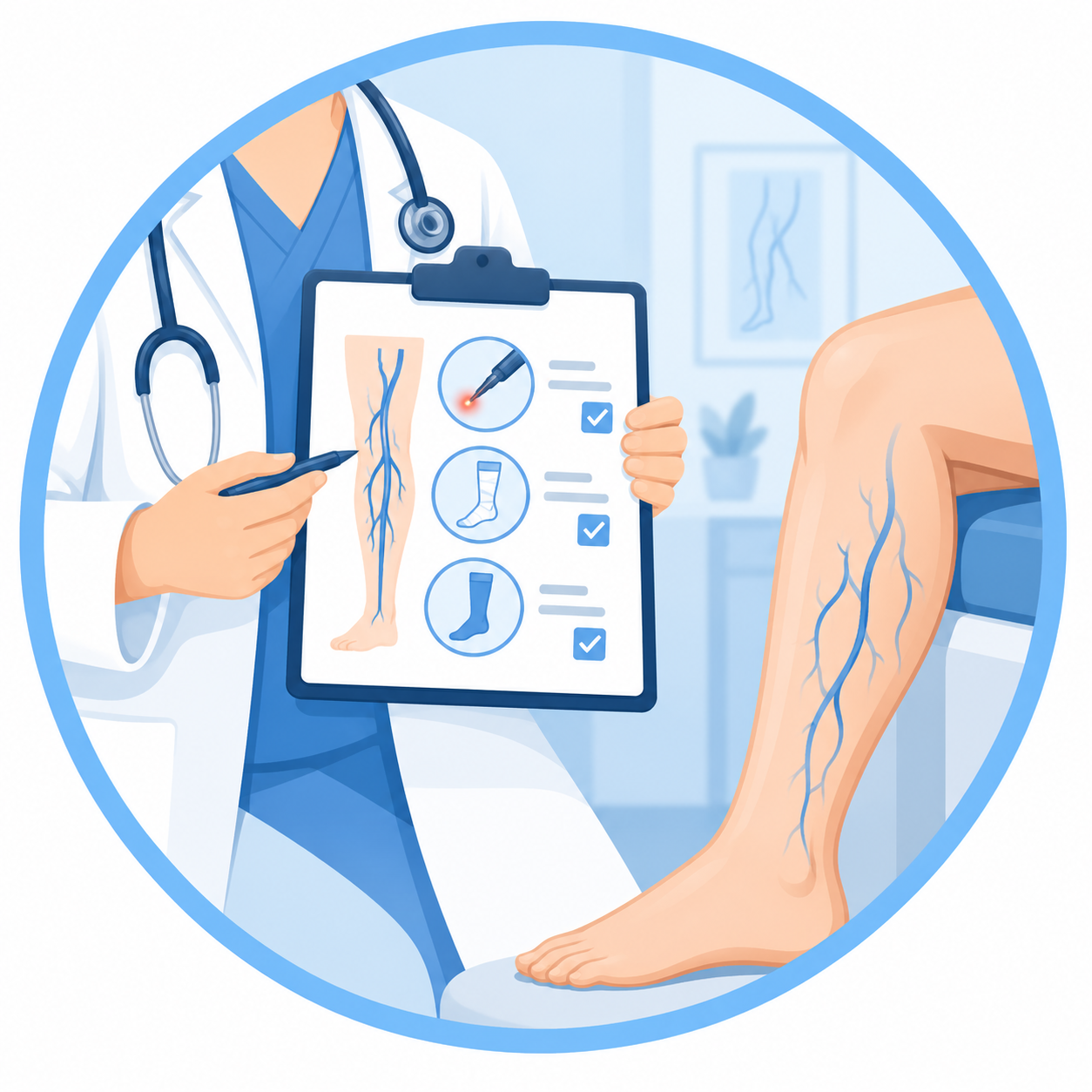
Procedure planning
The clinician explains the chosen treatment, consent process, medicines and any preparation you may need.
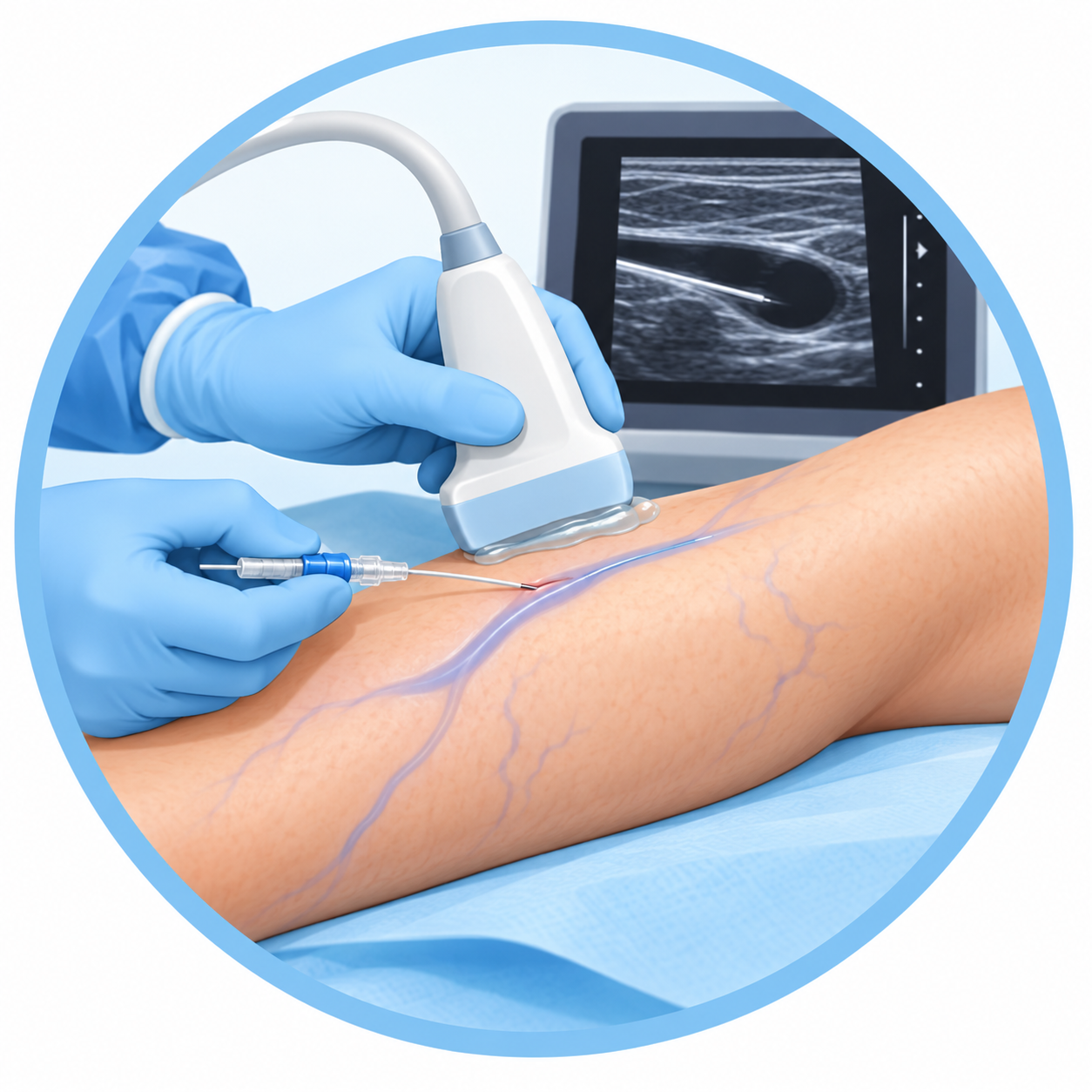
Ultrasound-guided access
A fine catheter or laser fibre is placed in the vein through a small skin puncture. Local anaesthesia is commonly used.
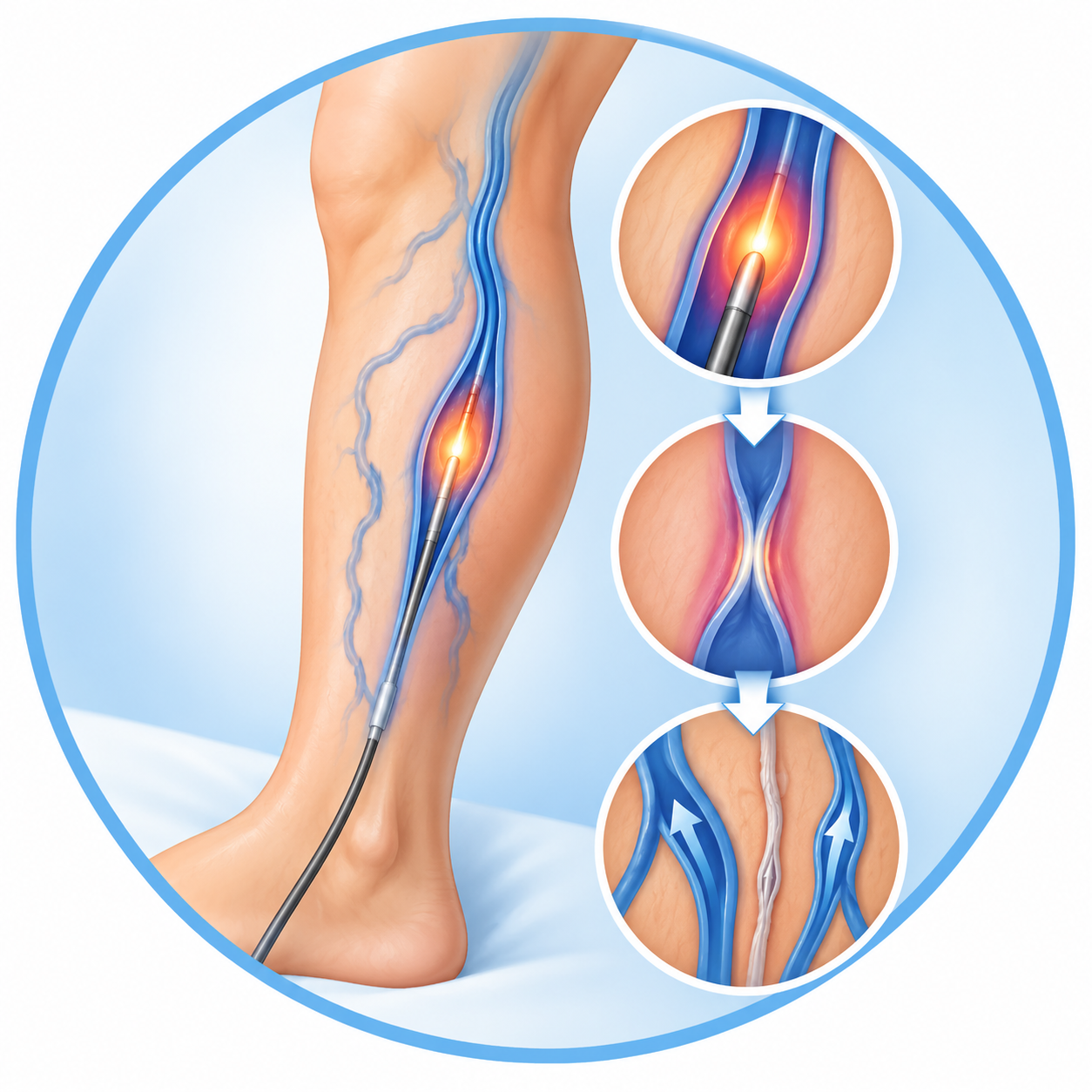
Controlled vein closure
Laser or radiofrequency energy is delivered along the selected segment. The treated vein gradually closes while blood uses other pathways.
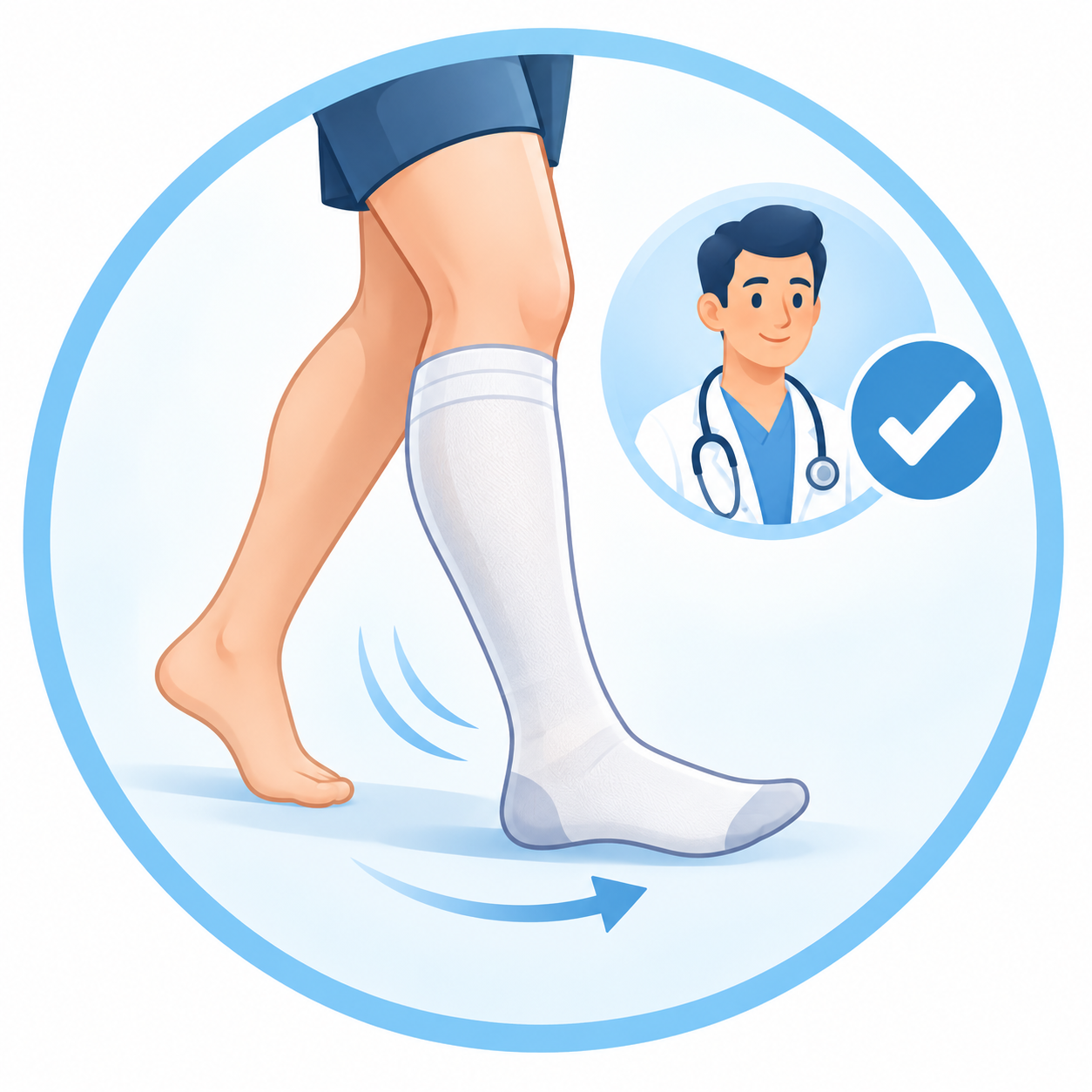
Recovery and review
The team provides walking, compression, activity and follow-up instructions appropriate to your treatment.
Recovery and Aftercare
Many people resume light daily activities relatively quickly after endovenous treatment. However, recovery depends on the veins treated, whether additional procedures were required, your overall health and the work you do.
Follow the personalised instructions you receive about walking, stockings, exercise, bathing, travel and review appointments. Contact your care team if pain or swelling becomes worse rather than improving.
Seek urgent medical attention for new significant one-sided leg swelling or pain, and emergency care for sudden breathlessness or chest pain.
- You might also notice that the pain improves when you lie down, and the blood drains away from the enlarged veins .
Are There Any Risks?
All procedures involve potential risks. After vein ablation or sclerotherapy, possible problems include bruising, discomfort, inflammation, skin pigmentation changes, altered skin sensation, burns or infection. Rarely, a blood clot can extend into a deep vein. Veins may reopen or new veins may appear over time.
The likelihood and relevance of each risk depend on the procedure and your circumstances. A suitable treatment decision balances symptoms, duplex ultrasound findings, benefits, alternatives and informed consent.
Why Consult Dr. Tegbir Singh Sidhu?
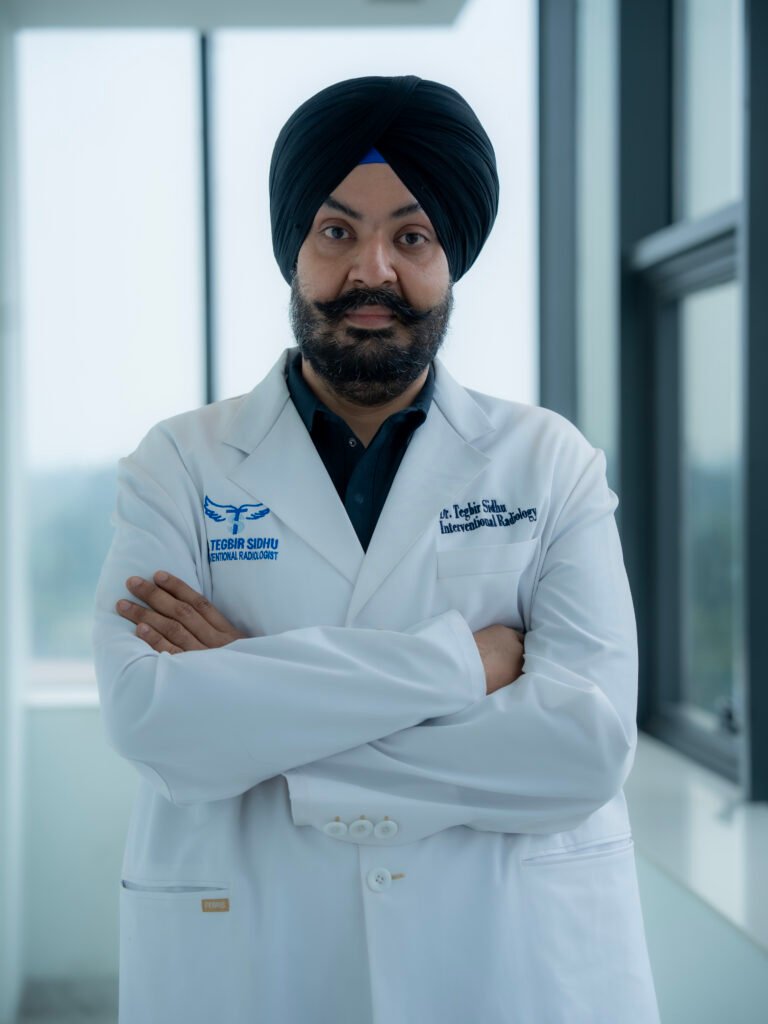
Dr. Tegbir Singh Sidhu is an Interventional Radiologist and Principal Consultant at Max Super Speciality Hospital, Mohali. His practice websites describe image-guided vascular care, including assessment of venous disease and endovenous treatment options.
A consultation focuses on reviewing symptoms and imaging, discussing whether intervention is appropriate and explaining the benefits, risks and alternatives in understandable terms. If a non-procedural approach or another specialty is more appropriate, that should be part of the discussion.
Clinic information: OPD No. 28, Max Super Speciality Hospital, Mohali. Telephone: +91 96460 00444. Confirm current clinic hours and appointment availability when calling.

Varicose Veins Treatment Cost in Mohali
The cost varies with the extent of venous reflux, whether one or both legs require treatment, the type of procedure, imaging, hospital charges and follow-up needs. Some patients also need treatment of smaller branch veins.
A reliable estimate requires examination and a treatment plan. Insurance coverage depends on your policy, the clinical indication and the insurer’s approval requirements. Ask the clinic for a written estimate and check coverage with your insurer.
Frequently Asked Questions
Can varicose veins go away on their own?
Established bulging veins usually do not disappear completely without treatment. Symptoms may improve with movement, leg elevation and suitable compression, but these measures do not repair failed valves. A clinician can advise whether treatment is needed.
Do all varicose veins need laser treatment?
No. Some people need reassurance or symptom management rather than a procedure. Others may benefit from EVLT, RFA, foam sclerotherapy or another option after assessment and duplex ultrasound.
Is EVLT or RFA painful?
Local anaesthetic is commonly used. Some people experience discomfort during anaesthetic injections and bruising or tenderness afterwards. Your treating team can explain what to expect and how discomfort is managed.
Can I walk after varicose veins treatment?
Walking is often encouraged shortly after endovenous treatment, but follow your clinician’s individual instructions, particularly if you have had more than one procedure.
How long does recovery take?
Many people return to light activities soon after endovenous ablation. Time off work and return to strenuous activity vary according to the procedure, symptoms and type of work.
Will the varicose veins come back after treatment?
Treatment can close the target vein, but other veins may become abnormal later and some treated veins can reopen. Review is appropriate if symptoms recur.
Looking for Varicose Veins Treatment in Mohali?
Whether you have visible swollen veins, persistent leg heaviness or a previous ultrasound report, a consultation can help clarify what is happening and whether a treatment is appropriate for you. Contact the clinic to arrange an assessment with Dr. Tegbir Singh Sidhu at Max Super Speciality Hospital, Mohali.