
Dr. Tegbir Sidhu

Pelvic Congestion Syndromefor
Treatment in Mohali

Finally, Lasting Relief from Chronic Pelvic Pain— Without Major Surgery |

Pelvic Congestion Syndrome (PCS) is a treatable condition caused by enlarged pelvic veins. Dr. Tegbir Sidhu offers advanced pelvic vein embolization—a safe, minimally invasive procedure that relieves pain without major surgery, helping you return to a healthier, more comfortable life.

Pelvic Congestion Syndrome Treatment in Mohali

What Is Pelvic Congestion Syndrome (PCS)?

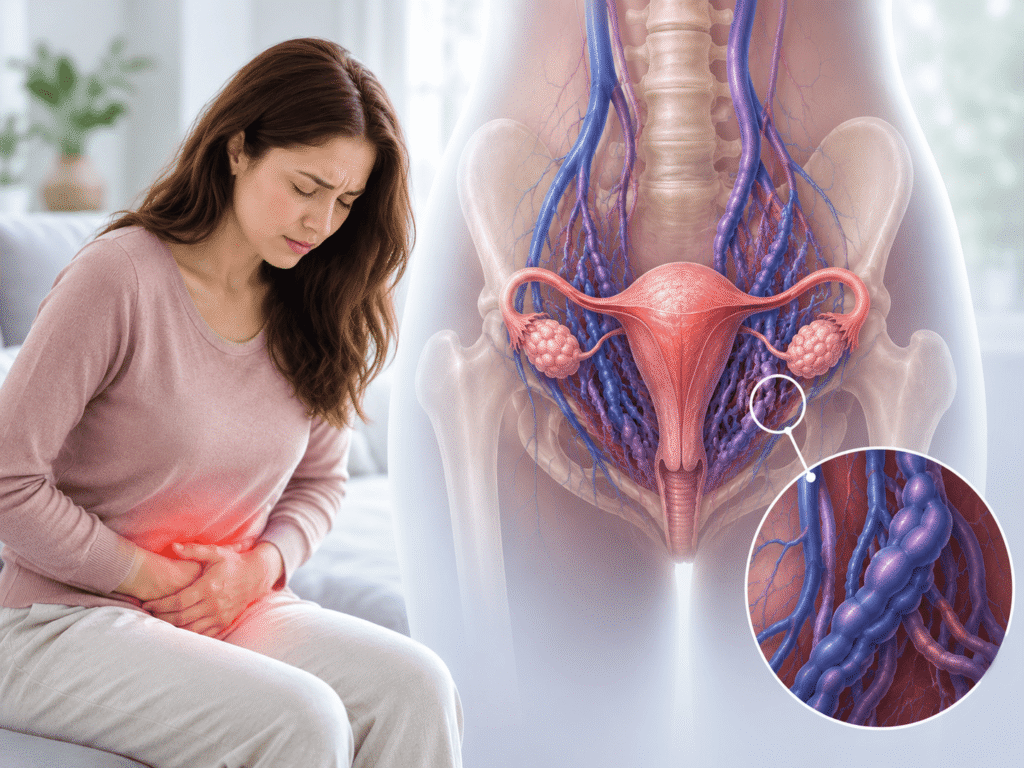
Think of pelvic congestion syndrome like varicose veins—but deep inside your pelvis. The condition happens when the veins in your pelvis, especially the ovarian veins, become enlarged and stop working properly.
Normally, tiny valves inside your veins keep blood flowing upward toward your heart. In PCS, these valves become weak and fail. Blood flows backward, pools in the pelvic veins, and causes them to stretch out. This pressure from swollen veins leads to that dull, heavy ache many women describe as a “dragging” feeling in their lower belly.
Ovarian vein embolization is the treatment that solves this problem. An interventional radiologist inserts a tiny tube through a small nick in your skin, guides it to the faulty vein, and closes it off. This instantly reduces pressure and eliminates the source of pain.
The goal of pelvic congestion syndrome treatment in Chandigarh is simple: stop the blood from pooling where it should not, and let your body heal.

Who Needs This Treatment


Pelvic congestion syndrome treatment is not for everyone with pelvic pain. But it can be life-changing for women who match a specific pattern.


✅ Your pelvic pain gets worse as the day goes on

✅ Pain becomes stronger when standing or walking

✅ Sitting down or lying flat brings relief

✅ Discomfort increases before or during your period

✅ Intercourse is painful for you

✅ You notice varicose veins on your thighs, buttocks, or vulva

✅ You have been pregnant at least once

✅ Pain has lasted six months or longer

✅ Other treatments, like pain medications, have not helped much

Who typically gets PCS?

Most women diagnosed are between the ages of 26 and 52. The condition is most common in women who have had children, because pregnancy hormones and the physical demands of carrying a baby can weaken the vein valves. However, women who have never been pregnant can also develop PCS.
Dr. Tegbir Sidhu has extensive experience identifying the subtle signs of pelvic congestion syndrome. He helps women who have been dismissed by other doctors finally find answers and effective chronic pelvic pain treatment.

Signs You Should Not Ignore

The most common pelvic congestion syndrome symptoms often go unrecognized. Many women learn to “live with” the pain, not knowing that treatment exists.
Pelvic Congestion Syndrome Treatment in Mohali

Chronic pelvic pain

a dull, heavy ache lasting more than six months

Embolization for Persistent Post-Abortion Bleeding (AVM) in Mohali

Frequent urination

urgent need to urinate

Embolization for Persistent Post-Abortion Bleeding (AVM) in Mohali

Pain during intercourse

this affects about 53% of women with PCS.

Permacath Placement in Mohali

Painful menstrual periods

reported in about 62% of women with PCS

Permacath Placement in Mohali

Lower-limb varicose veins occur

in roughly half of PCS patients.

Embolization for Persistent Post-Abortion Bleeding (AVM) in Mohali

A feeling of fullness or heaviness

in the pelvis or lower abdomen

Chronic pelvic pain treatment in Chandigarh with ovarian vein embolization targets all these symptoms by directly fixing the underlying vein problem.

Benefits of Pelvic Vein Embolization

When considering pelvic congestion syndrome care in Chandigarh, patients want to know: “Will this really help me?”
The evidence is clear. Success rates for ovarian vein embolization are excellent, and the procedure is highly effective for most women.
Carotid Artery Stenting (CAS) in Chandigarh

Dramatic pain reduction

About 80% of patients experience relief within weeks

Permacath Placement in Mohali

No major surgery

The procedure requires only a small puncture site, no large incisions

Embolization for Persistent Post-Abortion Bleeding (AVM) in Mohali

Outpatient procedure

Most patients go home the same day

Varicocele Treatment in Mohali

Return to normal activity quickly

Most resume regular routines within a week

Permacath Placement in Mohali

Low complication rates

Major problems are rare

Embolization for Persistent Post-Abortion Bleeding (AVM) in Mohali

Minimal scarring

Only a tiny mark remains

Brain Aneurysm Coiling in Mohali

Reduced need for pain medications

Many patients significantly cut back or stop pain relievers

Permacath Placement in Mohali

Lasting results

Studies show symptom relief persists

What Causes Pelvic Congestion Syndrome?

Understanding the pelvic congestion syndrome causes helps women feel validated—their pain is not “in their head.”

The primary cause is malfunctioning valves in the ovarian veins.

Veins rely on tiny one-way valves to push blood upward against gravity. In some women, these valves weaken. Blood flows backward and pools, stretching the veins. This increased pressure in the pelvic veins is what causes the pain.

Several factors contribute to this valve problem:

  1. Pregnancy and childbirth—The physical demands of carrying a child, combined with hormonal shifts, stretch and stress the pelvic veins. Multiple pregnancies increase risk.

  2. Hormonal factors—Estrogen seems to affect the vein wall elasticity. Women on hormone therapy or during high-estrogen phases may be more susceptible.

  3. Genetics—Some women inherit a tendency toward weak vein valves.

  4. Vein compression syndromes—Rarely, conditions like Nutcracker syndrome or May-Thurner syndrome compress pelvic veins, leading to congestion.

Can men develop pelvic congestion syndrome?

Yes, though it is much less common. The same underlying mechanism—faulty pelvic veins—can occur in men. Treatment follows similar principles.

How the Procedure Works

Pelvic vein embolization is performed by an interventional radiologist in Chandigarh—a doctor with specialized training in image-guided, minimally invasive treatments. Dr. Tegbir Sidhu is highly experienced in this technique.
Brain Aneurysm Coiling in Mohali

Access

You lie on a procedure table. A nurse starts an IV and gives medication to help you relax. The doctor numbs a small area on your upper thigh or neck. This is where the catheter enters the vein.

AV Fistula Angioplasty in Mohali

Catheter placement

Using X-ray guidance, the doctor passes a thin, flexible tube (catheter) through your vein and navigates it to the ovarian vein causing the problem.

Pelvic Congestion Syndrome Treatment in Mohali

Imaging

The doctor injects a special dye (contrast material) through the catheter. This lights up your veins on the X-ray screen, confirming exactly where the problem is located.

Embolization for Persistent Post-Abortion Bleeding (AVM) in Mohali

Embolization

Once the correct vein is identified, the doctor delivers the embolic agent through the catheter. This can be tiny metal coils, a liquid glue, or a medication that causes the vein to close.

Interventional Jaundice Treatment in Mohali

Final check

A last X-ray confirms the vein is fully closed. The catheter is removed, and pressure is applied to the small puncture site. A bandage covers the tiny wound.
The procedure takes about 60 minutes, but it can take longer if multiple veins need treatment.
The goal is to shut down the malfunctioning vein. Blood simply reroutes through healthy veins. The body adapts easily because the blocked vein was not carrying needed blood—it was causing harm by pooling blood.

Why Choose Dr. Tegbir Sidhu for Your Treatment?

When you search for pelvic congestion syndrome treatment in Chandigarh, Mohali, or Panchkula, you want confidence that you are in capable hands.

Dr. Tegbir Sidhu is a trusted interventional radiologist in Chandigarh dedicated to providing expert, compassionate care. Interventional radiology requires advanced skills in imaging and precise catheter-based techniques. Dr. Sidhu brings this specialized expertise to every patient.
Dr. Tegbir Sidhu

Treatment Process: Step-by-Step

For patients considering ovarian vein embolization in Chandigarh, knowing what to expect eases anxiety. Here is the journey from the first appointment to recovery.
AV Fistula Angioplasty in Mohali

Initial Consultation

Meet Dr. Tegbir Sidhu to discuss your symptoms, medical history, and treatment options.

Neurovascular Malformation Treatment in Mohali & Chandigarh

Diagnostic Imaging

A pelvic ultrasound, CT scan, or MRI confirms the diagnosis and helps plan your treatment.

Embolization for Persistent Post-Abortion Bleeding (AVM) in Mohali

Embolization Procedure

A minimally invasive procedure performed under sedation. Most patients go home the same day.

Brain Aneurysm Coiling in Mohali

Recovery

Resume normal activities within a week. Mild soreness is common, and pain relief begins within days to weeks.

Follow-Up

Regular follow-up visits ensure proper recovery and monitor your long-term symptom relief.

Recovery and Aftercare: What to Expect

Recovery is remarkably straightforward compared to surgery.
  • Same-day discharge—Most patients leave the hospital the same day after a few hours of observation
  • Mild soreness—You may feel some ache at the catheter site. Over-the-counter pain medications usually help.
  • Resume eating and drinking—You can eat normally once you are fully awake.
  • Limit heavy lifting—Avoid strenuous activities for about one week.
  • Shower, not baths—Keep the puncture site dry for 24 to 48 hours
  • Gradual return to activity—Walking is encouraged, but check with Dr. Sidhu before resuming exercise
When to call the doctor:
  • Fever above 101°F (38.3°C)
  • Bleeding or swelling at the puncture site
  • Sudden increase in pelvic pain
  • Numbness or color change in your leg
  • Shortness of breath or chest pain
What about symptom relief?
Most patients notice significant improvement within weeks. Relief is often described as “life-changing.”

Risks and Safety: What You Need to Know

Safety is a top concern for patients. Pelvic vein embolization is a safe, well-established procedure.

Infection

Very uncommon because the procedure is performed under sterile conditions

Bleeding or bruising

Mild bruising at the catheter site is possible.

Reaction to contrast dye

Some people are allergic to the dye used in X-ray imaging. Tell the doctor about any allergies.

Perforation

Extremely rare; the veins are thin, but doctors use X-ray guidance to avoid injury.

Missed or recurrent veins

In a small percentage of cases, symptoms may persist or return. A repeat procedure can address this if needed.

Migration of embolic material

The coils or glue might move from the target vein. This is rare, and doctors take precautions to prevent it.

Frequently Asked Questions

What is the success rate of ovarian vein embolization?
Success rates are excellent. Most studies show that about 80% of women experience significant improvement in pain symptoms.
Most patients experience only mild discomfort. You receive sedation medication to help you relax during the procedure. You will be awake but comfortable. The puncture site may feel sore afterward, but this typically resolves with over-the-counter pain medication.
The procedure typically takes about 60 minutes to several hours, depending on how many veins need treatment.
Most patients go home the same day after a few hours of observation.
Many patients notice improvement within weeks. Some feel better within days. The veins close immediately, but your body takes time to adjust and for full relief to develop.
Yes, you can. The procedure does not affect fertility, but pregnancy can increase the risk of recurrence. Discuss family planning with Dr. Sidhu.
Many insurance plans cover pelvic congestion syndrome treatment in Chandigarh when properly diagnosed. Check with your provider and the clinic for details.
Only a proper medical evaluation can diagnose PCS. The symptoms include pelvic pain worsening with standing, relieved by lying down, painful intercourse, and more. Dr. Tegbir Sidhu can evaluate your symptoms and recommend imaging tests.
Recurrence is possible but uncommon. If symptoms return, another procedure can be done.
You can contact the clinic directly to schedule a consultation. The clinic can guide you regarding any referral requirements.

Take the First Step Toward Pain-Free Living

Pelvic congestion syndrome treatment in Mohali & Chandigarh is accessible, effective, and life-changing. You do not have to accept chronic pelvic pain as a normal part of life.
Dr. Tegbir Sidhu is here to help you with expert, compassionate care. From the first consultation to follow-up appointments, you will receive personalized attention and clear explanations.

Call or click to schedule your appointment. Serving patients from Chandigarh, Mohali, Panchkula, Punjab, Haryana, and Himachal Pradesh.

Take the First Step Toward Pain-Free Living

Pelvic congestion syndrome treatment in Mohali & Chandigarh is accessible, effective, and life-changing. You do not have to accept chronic pelvic pain as a normal part of life.
Dr. Tegbir Sidhu is here to help you with expert, compassionate care. From the first consultation to follow-up appointments, you will receive personalized attention and clear explanations.

Call or click to schedule your appointment. Serving patients from Chandigarh, Mohali, Panchkula, Punjab, Haryana, and Himachal Pradesh.

Scroll to Top