Carotid Artery Stenting
Protecting Your Brain from Stroke |
Your carotid arteries carry blood to your brain. However, when they narrow, your risk of stroke increases. Therefore, carotid artery stenting can help open the narrowed artery and improve blood flow without major neck surgery. Dr. Tegbir Sidhu offers this minimally invasive treatment for eligible patients.
Prevent Stroke. Protect Life.
Safe. Effective. MinimallyInvasive.

Minimally Invasive
No large neck incision

Stroke Prevention
Reduce risk of future stroke

Quick Recovery
Shorter hospital stay and fast return to daily life

Safe and Effective
Proven result with advanced technology

Improved Quality of Life
Stay active, stay healthy
Understanding Carotid Artery Disease and Stenting
Your carotid arteries are the two main blood vessels on each side of your neck that deliver oxygen-rich blood to your brain. Over time, fatty deposits called plaque can build up inside these arteries, making them narrow and stiff. This condition is known as carotid artery disease.
As a result, narrowing can reduce blood flow to the brain. More importantly, pieces of plaque can sometimes break away, travel to smaller brain arteries, and cause a stroke. Carotid artery disease accounts for about 10% of strokes.
What is Carotid Artery Stenting?
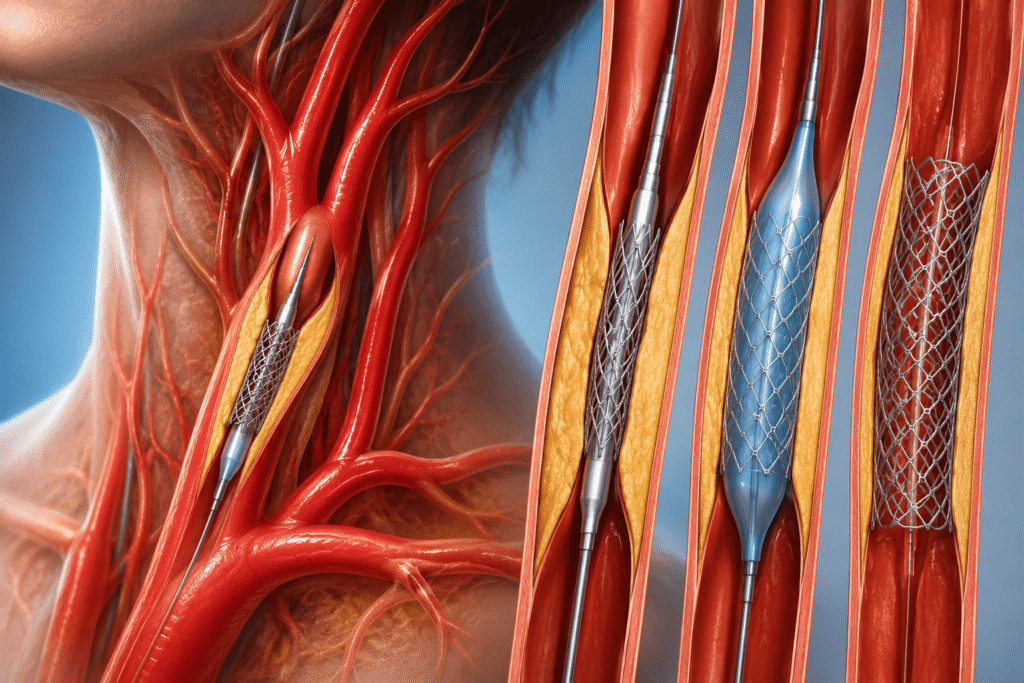
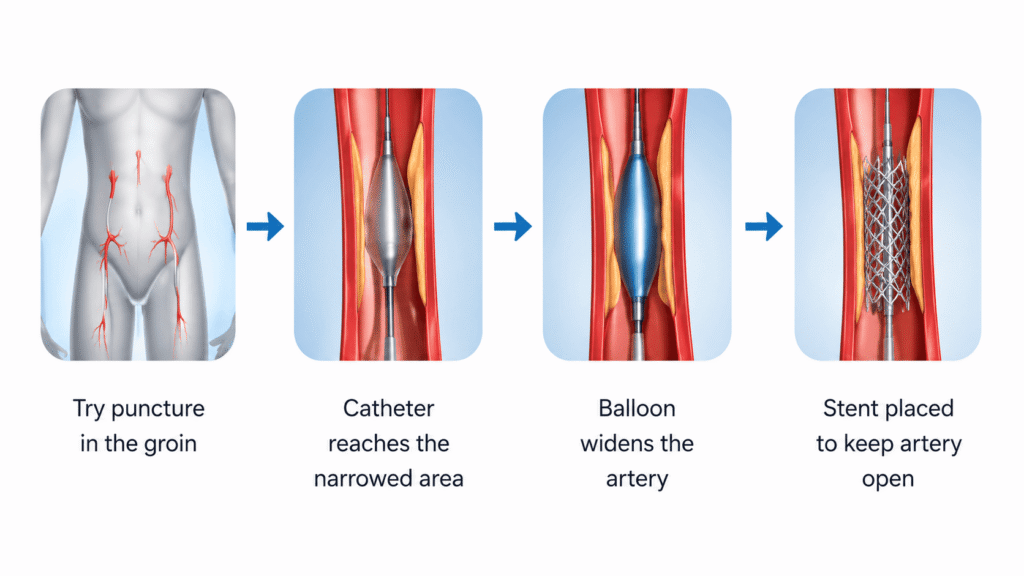
Carotid artery stenting (CAS) is a minimally invasive procedure that opens narrowed carotid arteries without a neck incision. First, Dr. Sidhu makes a tiny puncture in your groin and guides a catheter through your blood vessels to the narrowed area. Next, he inflates a small balloon to widen the artery. Finally, he places a stent, a small wire mesh tube that helps keep the artery open.
Who Needs This Treatment?
Dr Sidhu recommends carotid artery stenting for patients who have significant narrowing of their carotid arteries and are at risk of stroke.
✅ You have a carotid artery blockage of 70% or more.
✅ You have a blockage of 50-69% with symptoms like TIA or mini-stroke.
✅ Traditional carotid surgery is too risky due to other health conditions.
✅ You have had previous neck surgery or radiation to the neck.
✅ The location of the blockage makes surgery difficult.
- Dr Sidhu evaluates each patient carefully, considering the degree of narrowing, any stroke symptoms, your overall health, and your age and risk factors.
- Recognising the Warning Signs
Carotid artery disease often develops silently. The first sign might be a stroke or a transient ischemic attack (TIA) – sometimes called a “mini-stroke.”
- Sudden numbness or weakness on one side of the face, arm, or leg
- Sudden confusion or trouble speaking.
- Sudden vision problems in one or both eyes
- Sudden dizziness or loss of balance
- Sudden severe headache with no known cause
When to seek immediate help:
If you experience any stroke symptoms, even if they last only a few minutes, call emergency services immediately. A TIA can be an early warning sign; therefore, prompt medical evaluation is important because a full stroke could follow.
- Causes and Risk Factors
TThe most common cause is atherosclerosis, which occurs when fatty deposits called plaque build up inside the artery walls. Over time, these plaques can harden and narrow the artery.
- High blood pressure
- Smoking
- Diabetes
- High cholesterol
- Obesity
- Lack of exercise
- Age
- Family history
Benefits of Carotid Artery Stenting

Minimally Invasive
Instead of a large neck incision, the procedure uses a tiny puncture in your groin.

Shorter Hospital Stay
As a result, most patients can leave the hospital within 24 hours, depending on their recovery and medical condition.

Less Pain
Because CAS uses a small access site rather than a large surgical incision, patients may experience less post-procedure discomfort.

Preserves Neck Structures
In addition, the procedure avoids a large surgical incision in the neck and may reduce disruption to surrounding tissues.

Effective Stroke Prevention
Most importantly, carotid artery stenting can improve blood flow through a significantly narrowed artery and help reduce stroke risk in appropriately selected patients.

Quick Recovery
Quick Recovery
Why Choose Dr. Tegbir Sidhu?
When it comes to carotid artery stenting, the skill and experience of your interventional radiologist matter greatly.
Over 15+ Years of Experience
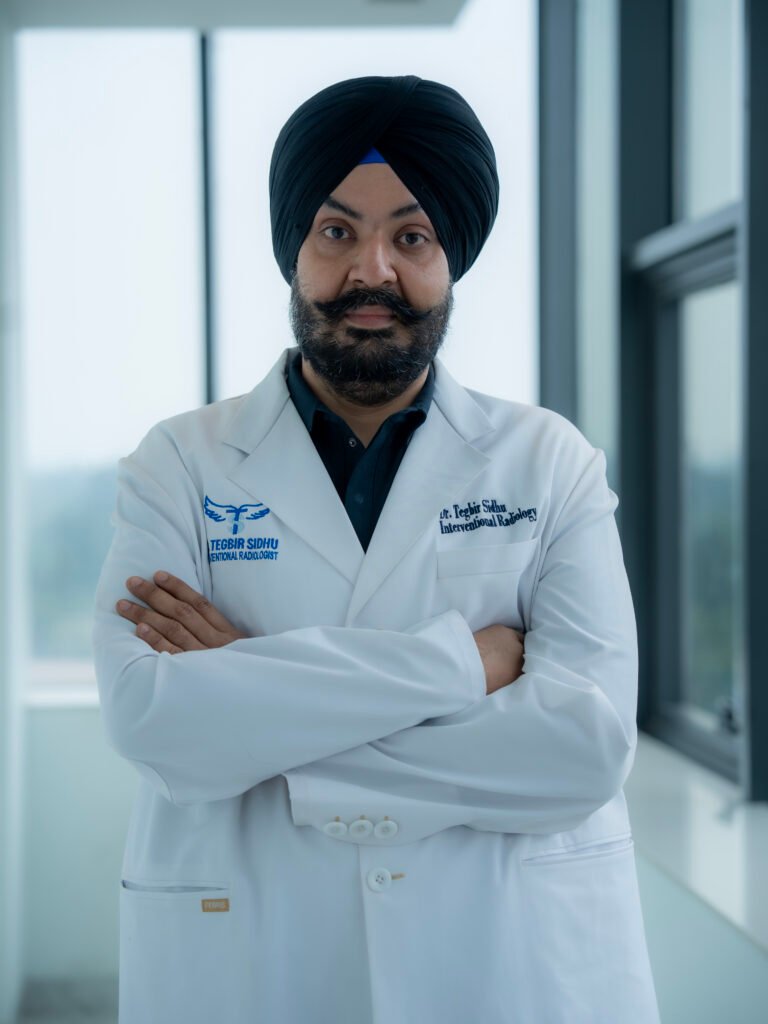
Dr Sidhu is an internationally trained Interventional Radiologist with extensive experience in carotid stenting and other image-guided procedures.
Internationally Trained
He completed advanced training at renowned hospitals in India, South Korea, and Europe.
Expert in Minimally Invasive Care
Dr Sidhu specialises in treatments that avoid major surgery. He uses the latest techniques and technologies to achieve optimal outcomes.
Trusted by International Patients
Patients from over 25 countries have trusted Dr Sidhu for advanced medical treatment.
Patient-Centred Approach
Dr Sidhu is known for his compassionate care, meticulous attention to detail, and clear communication.
- How the Procedure Works
- Dr Sidhu reviews your medical history and imaging studies.
- You’ll receive clear instructions about which medications to stop.
- You may be asked to fast for several hours beforehand.
- Anaesthesia – You receive medication to help you relax. The procedure is usually done under local anaesthesia with sedation.
- Access – A small puncture is made in your groin to access your femoral artery.
- Catheter Guidance – A thin catheter is guided through your blood vessels to the narrowed carotid artery. Moving X-ray images help Dr Sidhu see exactly where he’s going.
- Balloon Inflation – A tiny balloon at the catheter tip is inflated, pressing plaque against the artery wall and widening the passageway.
- Stent Placement – A small mesh tube (stent) is inserted and expanded. The stent stays permanently, holding the artery open.
- Embolic Protection – A special filter catches any small pieces of plaque that might break off during the procedure.
- Completion – The balloon and catheter are removed. The puncture site is closed.
- Recovery & Aftercare
- Dr Sidhu reviews your medical history and imaging studies.
- Our team provides clear instructions about medications you need to stop.
- You may receive an ultrasound to confirm the stent is properly placed.
- The puncture site may remain tender, swollen, or bruised for a few days.
- Over-the-counter pain relievers are usually sufficient for discomfort.
- Avoid strenuous activity and heavy lifting for about 24 hours.
- Do not drive for at least 24 hours.
You’ll need to take blood-thinning medications to prevent blood clots from forming in the stent. It’s crucial to take these exactly as prescribed.
- Quit smoking
- Maintain a healthy weight.
- Eat a heart-healthy diet.
- Limit salt
- Exercise regularly
- Manage health conditions like diabetes and high blood pressure.
- New weakness, numbness, or speech changes
- Severe headache
- Vision problems
- Fever or chills
- Bleeding, swelling, or redness at the puncture site
Treatment Process Step-by-Step
Initial Consultation
Dr. Sidhu reviews your medical history, symptoms, and imaging. He discusses your condition, treatment options, and answers all your questions.
Pre-Procedure Preparation
You receive instructions about medications. Blood tests and imaging are performed.
The Procedure
Performed under local anaesthesia with sedation. The catheter is guided to the carotid artery, the balloon is inflated, and the stent is placed. Takes 1-2 hours.
Post-Procedure Monitoring
You’ll lie flat for about an hour. Your blood pressure and heart rate are closely monitored. Most patients stay in the hospital overnight.
Discharge
An ultrasound checks the stent. You’ll receive aftercare instructions and medications. Most patients go home within 24 hours.
Follow-Up
Regular follow-up appointments to monitor your progress and manage risk factors.