
Family history
First, some types of neurovascular malformations can run in families.

Gender
In addition, certain malformations may occur slightly more often in men

Certain genetic conditions
hereditary hemorrhagic telangiectasia can be associated with certain vascular abnormalities.

Previous brain injury
In rare cases, abnormal blood vessels may develop after a previous brain injury.
Sudden, Severe Headaches
we’re talking “worst headache of your life” territory

Seizures
Especially if you’ve never had them before

Weakness or Numbness
On one side of your body, almost like a stroke

Vision changes
Double vision, blurring, or even temporary loss

Speech difficulties
Slurring words or struggling to find the right ones

Dizziness or Balance problems
Feeling unsteady on your feet
 Your doctor found an AVM during a scan for something else.
You’ve been having seizures, and tests showed a brain blood vessel abnormality.
You experience persistent headaches, weakness, or vision changes.
Your malformation shows signs that it could bleed or rupture.
You want to prevent complications before they become life-threatening.
Patients travel from all over—Mohali, Chandigarh, Panchkula, Punjab, Himachal and even J&K—specifically to see Dr. Sidhu. Why? Because he offers AVM treatment without open surgery. That’s a game-changer for most people.

Getting Access
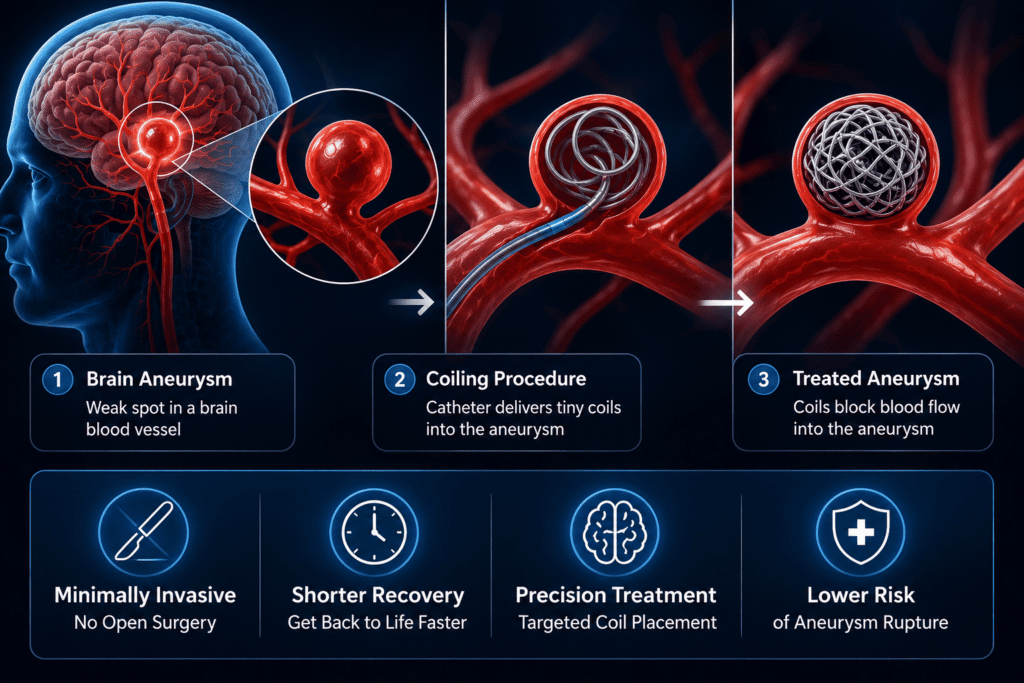
Dr. Sidhu makes a tiny puncture in your groin area. This gives him access to your femoral artery. You’re under anesthesia, so you won’t feel a thing.

Navigation
Using live X-ray imaging, he guides a thin catheter (think of it like a very fine tube) through your blood vessels all the way up to your brain. It sounds wild, but this is exactly what interventional radiologists do every day.

The Treatment
Once the catheter reaches the abnormal vessels, Dr. Sidhu injects a special liquid agent. This seals off the malformation. No more abnormal blood flow. No more high-pressure connections.

Healing Begins
Your body’s natural healing process takes over. The blocked vessels eventually shrink and scar down. The risk of bleeding drops dramatically.

Recovery
The catheter comes out. You rest. And you start getting better.
Dr. Sidhu specializes in AVM embolization. It’s a minimally invasive procedure that treats neurovascular disorders without cutting open your skull.
No large incisions – just a tiny puncture in your groin
Less pain – because there’s no major surgery involved. Shorter hospital stay – most patients go home in 1 to 3 days. Faster recovery – you’re back to your routine much sooner. Lower complication rates – compared to traditional open surgery.Precise treatment – the liquid embolic agent goes exactly where it needs to

The First Meeting
First, you meet Dr. Sidhu to discuss your symptoms, medical history, and concerns. During this consultation, you can explain what you've been experiencing while he reviews your medical information. He then listens to your concerns and explains the next steps.

Getting the Full Picture
Next, you may undergo specialised imaging such as MRI, CT, or digital subtraction angiography (DSA). These tests provide Dr. Sidhu with a detailed view of the malformation and surrounding blood vessels.
Customized Plan
Based on your specific condition, Dr. Sidhu creates a treatment plan tailored just for you. Not a one-size-fits-all approach. Something designed around your unique situation.
The Procedure
During the procedure, you receive appropriate anaesthesia and remain comfortably monitored by the medical team. Once treatment is complete, you move to the recovery area for observation.

Recovery and Follow-up
After the procedure, you spend a short period in the hospital for monitoring. Once your medical team confirms that you are ready, you can return home. Later, follow-up visits help monitor your recovery.