Liver Biopsy in Mohali
Painless, Precise Liver Biopsy in Mohali – Same-Day Procedure by Dr. Tegbir Sidhu |
- Serving Patients From: Chandigarh, Mohali, Panchkula, Punjab, Haryana, Himachal Pradesh, J&K
What Is a Liver Biopsy?
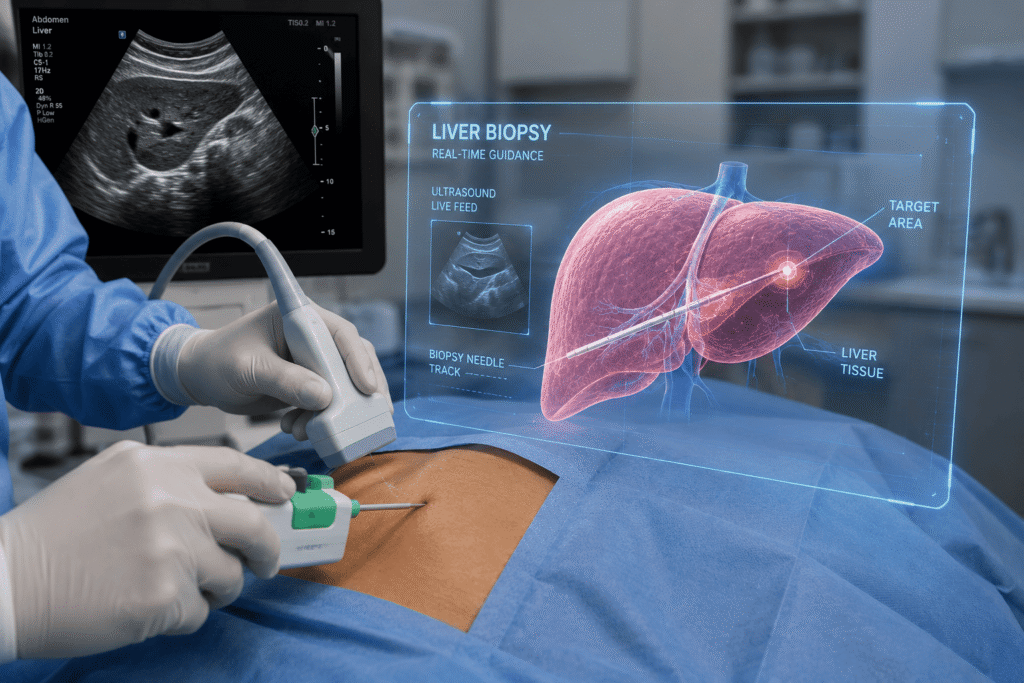
A liver biopsy is a simple, minimally invasive procedure. Your doctor removes a tiny piece of liver tissue to check for damage, disease, or scarring.
Think of it like taking a small sample from a cake to check if it is baked perfectly. You do not ruin the cake. Similarly, we take a small sample—less than a grain of rice—while your liver continues working normally.
Who Needs This Treatment?
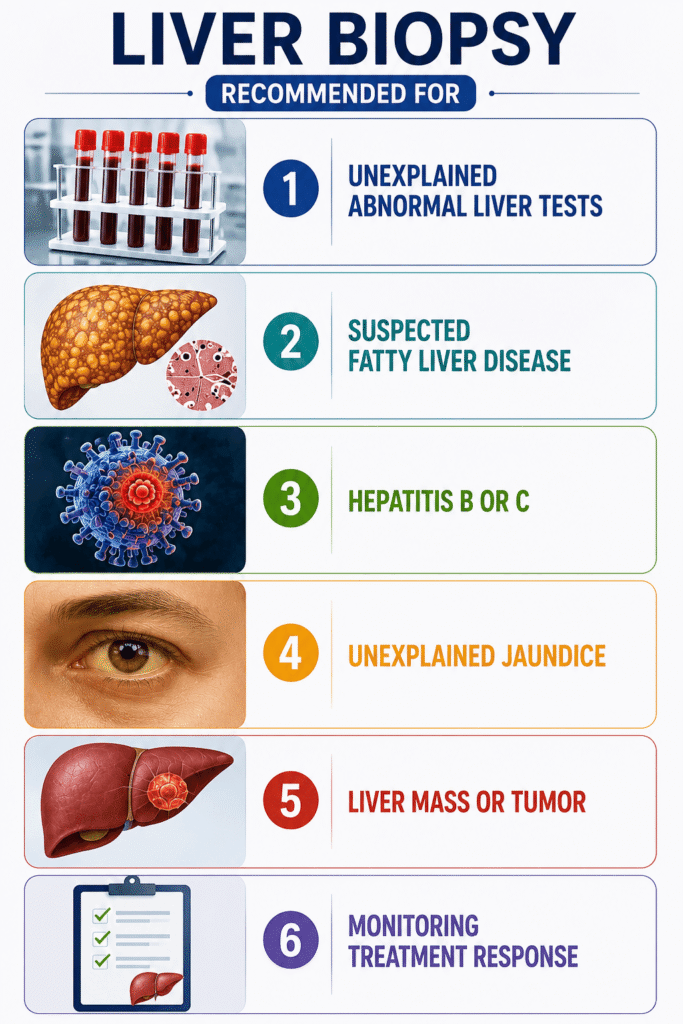
- Unexplained abnormal liver tests – Your LFT (liver function test) numbers stay high for months.
- Suspected fatty liver disease – You have fatty liver, but doctors need to know if there is inflammation or early scarring.
- Hepatitis B or C – To measure how much damage the virus caused.
- Unexplained jaundice – Yellow skin or eyes without a clear cause.
- Liver mass or tumor – To determine if a growth is harmless or dangerous.
- Monitoring treatment response – Checking if your current medicine is actually healing the liver.
Symptoms That Point Toward Liver Trouble
Persistent tiredness that sleep does not fix
Yellow tint in your eyes or skin (jaundice)
Unexplained weight loss
Swelling in your belly or legs
Dark urine like cola
Pale, bloody, or tar-colored stoo
Nausea or loss of appetite for weeks
Important: Do not ignore these. A liver biopsy specialist in Mohali can confirm what is happening inside your liver before symptoms become severe.
Benefits of the Procedure
Causes & Risk Factors for Liver Disease
Non-alcoholic fatty liver disease (NAFLD) –
Very common in people with diabetes, high BP, or excess belly fat.
Viral hepatitis (B & C) –
Silent infections that damage the liver over decades.
Autoimmune liver diseases –
Your own immune system attacks your liver.
Certain medications –
Long-term use of painkillers or specific antibiotics.
Heavy alcohol use –
Over 10-15 years.
Genetic conditions –
Like hemochromatosis (iron overload).
How the Procedure Works
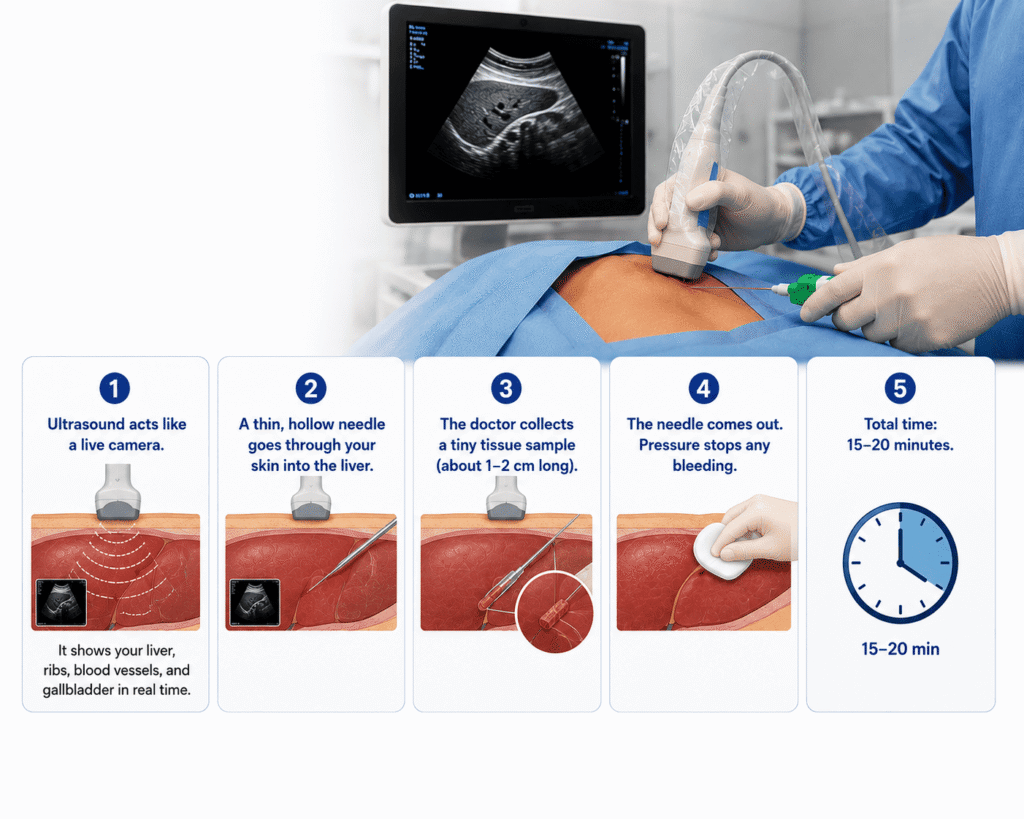
- Ultrasound acts like a live camera. It shows your liver, ribs, blood vessels, and gallbladder in real time.
- A thin, hollow needle goes through your skin into the liver.
- The doctor collects a tiny tissue sample (about 1-2 cm long).
- The needle comes out. Pressure stops any bleeding.
- Total time: 15–20 minutes.
Why Choose Dr. Tegbir Sidhu for Your Liver Biopsy?
Specialized training in image-guided procedures –
Unlike general physicians, Dr. Tegbir Sidhu performs ultrasound-guided biopsies daily. Precision matters.
Pain management first –
We use numbing medicine and, if needed, mild sedation. You stay comfortable.
Same-day results pathway –
Your sample goes to the lab immediately. Faster answers mean faster treatment.
No unnecessary referrals –
You meet the procedural expert directly. No waiting weeks for a “biopsy slot.”
Clean, private, and respectful care –
We understand liver disease carries stigma. You will be treated with dignity, not judgment.
TACE Treatment Process Step-by-Step
Pre-procedure check (Day before)
- Blood test to check clotting.
- Stop blood thinners (if any) as advised.
- Light dinner. Nothing to eat or drink 6 hours before.
Arrival at the center (Mohali)
- Comfortable private room.
- Change into a hospital gown.
Positioning & numbing (5 minutes)
- You lie on your back or left side.
- Ultrasound marks the exact spot.
- Local anesthesia was injected. You feel a small pinch, then numbness.
The biopsy (30 seconds)
- You hold your breath for 5–10 seconds.
- The doctor inserts the needle and collects the sample.
- A quick “click” sound. That is it.
Observation (2–4 hours)
- You rest lying down.
- Nurses, check your BP and pulse.
- A small bandage over the site.
Going home
- The doctor explains when to expect results (usually 3–7 days).
- No driving for 24 hours if sedation was used.
- Normal food and water allowed.
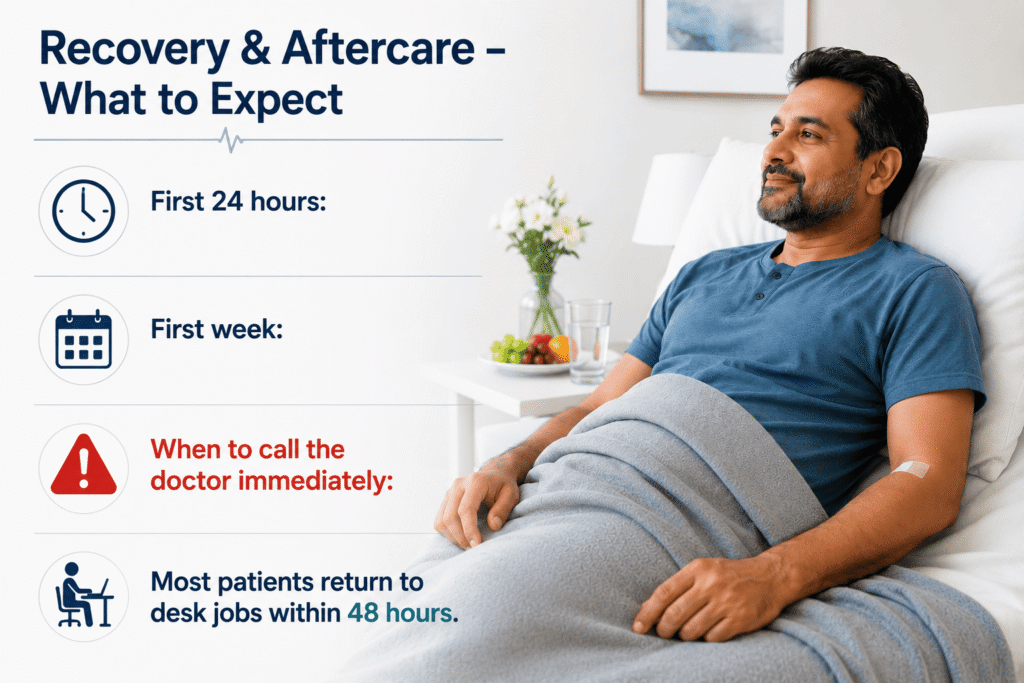
Recovery & Aftercare – What to Expect
- Lie down for the first 6 hours.
- Use an ice pack over the biopsy site if sore.
- Avoid lifting anything heavier than 5 kg.
- No gym, running, or heavy work.
- The shower is fine. No tub baths or swimming.
- You may feel a dull ache in your right shoulder (this is referred pain from the diaphragm – very normal).
- Eat light, easily digestible meals.
- Severe pain that does not go away
- Blood on your bandage that soaks through
- Fever over 101°F (38.3°C)
- Difficulty breathing
Risks and Safety (Honest & Transparent)
- Local pain or bruising (70% of patients) – resolves in 2 days.
- Shoulder tip pain (30%) – harmless, goes away.
- Bleeding requiring transfusion
- Bile leak
- Puncture of the lung or gallbladder
- Major bleeding needing surgery
Dr. Sidhu performs a final ultrasound check before the needle goes in. If your liver is too hard to sample or your blood counts are unsafe, he will stop and discuss alternatives. No one rushes a biopsy.