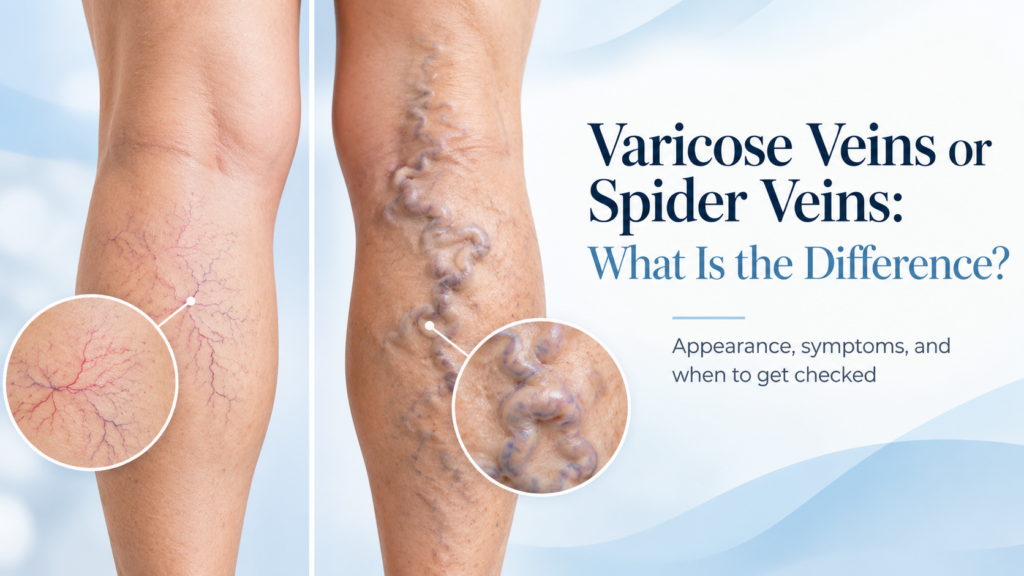
Varicose Veins or Spider Veins: what is the difference?
From my experience Spider veins appear small and flat blending into the skin. Spider veins look like lines or web‑like clusters. Varicose veins on the hand are larger, swollen and often twisted or bulging. Either type can be visible. You may not need treatment. If you notice aching, heaviness, itching, ankle swelling or any change in the skin it is an idea to ask a clinician for an assessment. How Varicose veins Feel From my experience Spider veins or thread veins usually look like lines or web‑like clusters. Spider veins are often a concern for many. Some people notice itching or discomfort. Varicose veins are usually more noticeable than spider veins. They often appear raised, lumpy, or rope-like under the skin. You may also experience aching, heaviness, itching, cramps, or swelling around your ankles and legs. Symptoms, from Varicose veins may feel worse after standing for a time. Feature Symptoms Often there are no symptoms but sometimes there is itching or discomfort It may also bring aching, heaviness, itching, cramps or swelling What to do If the look of the veins is all you worry about getting treatment is up to youGet an assessment if you notice symptoms changes, in the skin or a sore appearsJust looking at a person does not give a doctor a diagnosis. Stretched veins that you can see might tell the doctor what type of vein it is, because they are close to the skin.. Just looking at them does not reveal whether blood is moving backwards in larger veins, near the surface. Doctors call this backward flow reflux. A doctor will look at your symptoms. Feel your legs. Your doctor may use a duplex ultrasound to examine your varicose veins and check for backward blood flow (reflux), especially when a specialist assesses your condition or plans your treatment. When to get your veins checked You should book an appointment if your legs keep aching or feel heavy. If your ankles keep swelling, your skin changes colour, you experience persistent itching, or you notice a sore that won’t heal, you should see a doctor. You can also talk to a doctor, about any veins that worry you even if they aren’t painful.Seeing a doctor doesn’t mean you need to start treatment right away. It just means you’re taking a look. If a vein starts bleeding get help right away If you suddenly experience pain or swelling in one leg, seek urgent medical attention. This could be due to something than varicose veins like a blood clot. If you have leg symptoms and also feel chest pain or have trouble breathing go to the emergency room immediately. Do varicose veins need treatment? Not always, If you can see the veins but they aren’t causing any pain or discomfort, you may not need treatment.. If you are having pain, swelling or changes in your skin a doctor can examine your veins and discuss what options might work for you.Some treatments do not require surgery. However whether these treatments are right for you and what risks they carry depends on your case.If you are thinking about -surgical treatment for varicose veins in Mohali start with a proper evaluation. Dr Sidhu’s website has information about varicose veins. It also lists varicose vein ablation as a procedure. Reach out to the clinic to find out if this treatment is currently available and if it could be a fit, for your condition. FAQs Are spider veins and varicose veins the same? They are related. They are not the same. Spider veins are red or blue lines that show up close to the skin surface. Varicose veins are bigger often swollen and raised. You can’t tell if blood is flowing the way just by looking. If you have symptoms it’s best to see a clinician. Can varicose veins make your legs itch? Yes itching can happen with varicose veins. If the itch keeps coming gets worse or happens with swelling or skin changes it’s a signal to see a doctor. Will I need an ultrasound? Not always. A clinician might recommend a duplex ultrasound to check how blood flows through your veins. This test helps decide what steps to take next. Whether it’s needed depends on your symptoms. What the clinician finds during the exam. Do visible veins have to be treated? No. If the veins don’t cause any pain, discomfort or other issues treatment is not required. If you’re unhappy with the way they look talk to a clinician about treatment options. What risks might be involved.