
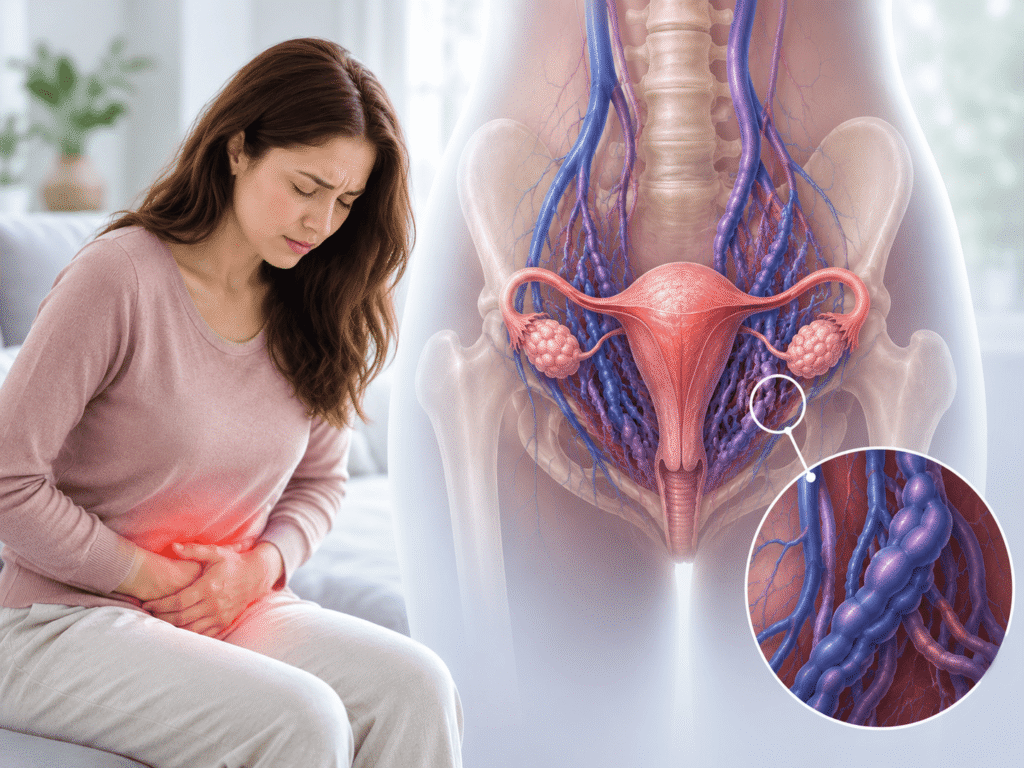
Pelvic Congestion Syndromefor
Treatment in Mohali
Finally, Lasting Relief from Chronic Pelvic Pain— Without Major Surgery |
Pelvic Congestion Syndrome (PCS) is a treatable condition caused by enlarged pelvic veins. Dr. Tegbir Sidhu offers advanced pelvic vein embolization—a safe, minimally invasive procedure that relieves pain without major surgery, helping you return to a healthier, more comfortable life.
What Is Pelvic Congestion Syndrome (PCS)?
Who Needs This Treatment
Pelvic congestion syndrome treatment is not for everyone with pelvic pain. But it can be life-changing for women who match a specific pattern.
✅ Your pelvic pain gets worse as the day goes on
✅ Pain becomes stronger when standing or walking
✅ Sitting down or lying flat brings relief
✅ Discomfort increases before or during your period
✅ Intercourse is painful for you
✅ You notice varicose veins on your thighs, buttocks, or vulva
✅ You have been pregnant at least once
✅ Pain has lasted six months or longer
✅ Other treatments, like pain medications, have not helped much
Who typically gets PCS?
Signs You Should Not Ignore

Chronic pelvic pain
a dull, heavy ache lasting more than six months

Frequent urination
urgent need to urinate

Pain during intercourse
this affects about 53% of women with PCS.

Painful menstrual periods
reported in about 62% of women with PCS

Lower-limb varicose veins occur
in roughly half of PCS patients.

A feeling of fullness or heaviness
in the pelvis or lower abdomen
Benefits of Pelvic Vein Embolization

Dramatic pain reduction
About 80% of patients experience relief within weeks

No major surgery
The procedure requires only a small puncture site, no large incisions

Outpatient procedure
Most patients go home the same day

Return to normal activity quickly
Most resume regular routines within a week

Low complication rates
Major problems are rare

Minimal scarring
Only a tiny mark remains

Reduced need for pain medications
Many patients significantly cut back or stop pain relievers

Lasting results
Studies show symptom relief persists
- The Takeaway: This is not a band-aid solution. It treats the mechanical problem directly, offering genuine, lasting improvement for women who have suffered for years.
What Causes Pelvic Congestion Syndrome?
Several factors contribute to this valve problem:
- Pregnancy and childbirth—The physical demands of carrying a child, combined with hormonal shifts, stretch and stress the pelvic veins. Multiple pregnancies increase risk.
- Hormonal factors—Estrogen seems to affect the vein wall elasticity. Women on hormone therapy or during high-estrogen phases may be more susceptible.
- Genetics—Some women inherit a tendency toward weak vein valves.
- Vein compression syndromes—Rarely, conditions like Nutcracker syndrome or May-Thurner syndrome compress pelvic veins, leading to congestion.
Can men develop pelvic congestion syndrome?
How the Procedure Works

Access
You lie on a procedure table. A nurse starts an IV and gives medication to help you relax. The doctor numbs a small area on your upper thigh or neck. This is where the catheter enters the vein.

Catheter placement
Using X-ray guidance, the doctor passes a thin, flexible tube (catheter) through your vein and navigates it to the ovarian vein causing the problem.

Imaging
The doctor injects a special dye (contrast material) through the catheter. This lights up your veins on the X-ray screen, confirming exactly where the problem is located.

Embolization
Once the correct vein is identified, the doctor delivers the embolic agent through the catheter. This can be tiny metal coils, a liquid glue, or a medication that causes the vein to close.

Final check
A last X-ray confirms the vein is fully closed. The catheter is removed, and pressure is applied to the small puncture site. A bandage covers the tiny wound.

Why Choose Dr. Tegbir Sidhu for Your Treatment?
- Patient-centered approach—Your comfort, safety, and understanding come first
- Minimally invasive expertise—Avoiding major surgery while achieving excellent results
- Regional convenience—Serves Chandigarh, Mohali, Panchkula, and surrounding areas
- Clear communication—No confusing jargon, just straightforward answers
Treatment Process: Step-by-Step

Initial Consultation
Meet Dr. Tegbir Sidhu to discuss your symptoms, medical history, and treatment options.

Diagnostic Imaging
A pelvic ultrasound, CT scan, or MRI confirms the diagnosis and helps plan your treatment.

Embolization Procedure
A minimally invasive procedure performed under sedation. Most patients go home the same day.

Recovery
Resume normal activities within a week. Mild soreness is common, and pain relief begins within days to weeks.

Follow-Up
Regular follow-up visits ensure proper recovery and monitor your long-term symptom relief.
Recovery and Aftercare: What to Expect
- Same-day discharge—Most patients leave the hospital the same day after a few hours of observation
- Mild soreness—You may feel some ache at the catheter site. Over-the-counter pain medications usually help.
- Resume eating and drinking—You can eat normally once you are fully awake.
- Limit heavy lifting—Avoid strenuous activities for about one week.
- Shower, not baths—Keep the puncture site dry for 24 to 48 hours
- Gradual return to activity—Walking is encouraged, but check with Dr. Sidhu before resuming exercise
- Fever above 101°F (38.3°C)
- Bleeding or swelling at the puncture site
- Sudden increase in pelvic pain
- Numbness or color change in your leg
- Shortness of breath or chest pain
Risks and Safety: What You Need to Know
Infection
Very uncommon because the procedure is performed under sterile conditions
Bleeding or bruising
Mild bruising at the catheter site is possible.
Reaction to contrast dye
Some people are allergic to the dye used in X-ray imaging. Tell the doctor about any allergies.
Perforation
Extremely rare; the veins are thin, but doctors use X-ray guidance to avoid injury.
Missed or recurrent veins
In a small percentage of cases, symptoms may persist or return. A repeat procedure can address this if needed.
Migration of embolic material
The coils or glue might move from the target vein. This is rare, and doctors take precautions to prevent it.